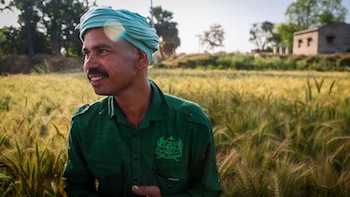
Sumant Kumar, a farmer in India’s Bihar State, recorded a world-record rice yield in 2012 using a method known as the System of Rice Intensification. He has applied the same techniques to his wheat crop. Photo by Sam Eaton.
The latest batch of “What’s for Lunch” stories on PRI’s The World highlight farming methods that don’t bust the global carbon budget.
On July 25, Sam Eaton reported from northeastern India on the System of Rice Intensification, which uses less water and fewer chemicals than conventional farming. The method has been spreading not just among rice growers, but also among producers of wheat and other crops. Still, some scientists are skeptical.
On July 15, Bianca Vazquez Toness met farmers in central India who are using human waste to fertilize their crops. Sewage contains high levels of valuable nitrogen and phosphorous, and putting it to use seems like a no-brainer: synthetic nitrogen is a major greenhouse gas polluter, phosphorous is increasingly scarce, and waste disposal is an enormous challenge in the developing world’s fast-growing cities. But human waste harbors dangerous microbes. The trick is to find ways to process and spread it without endangering consumers’ or farmworkers’ health.
On July 8, The World’s Mary Kay Magistad visited a Chinese inventor who has created what he believes may be the world’s most efficient irrigation system. China’s aquifers are in serious trouble; if farmers can radically reduce their water consumption, the country won’t need to import nearly as much of its food.
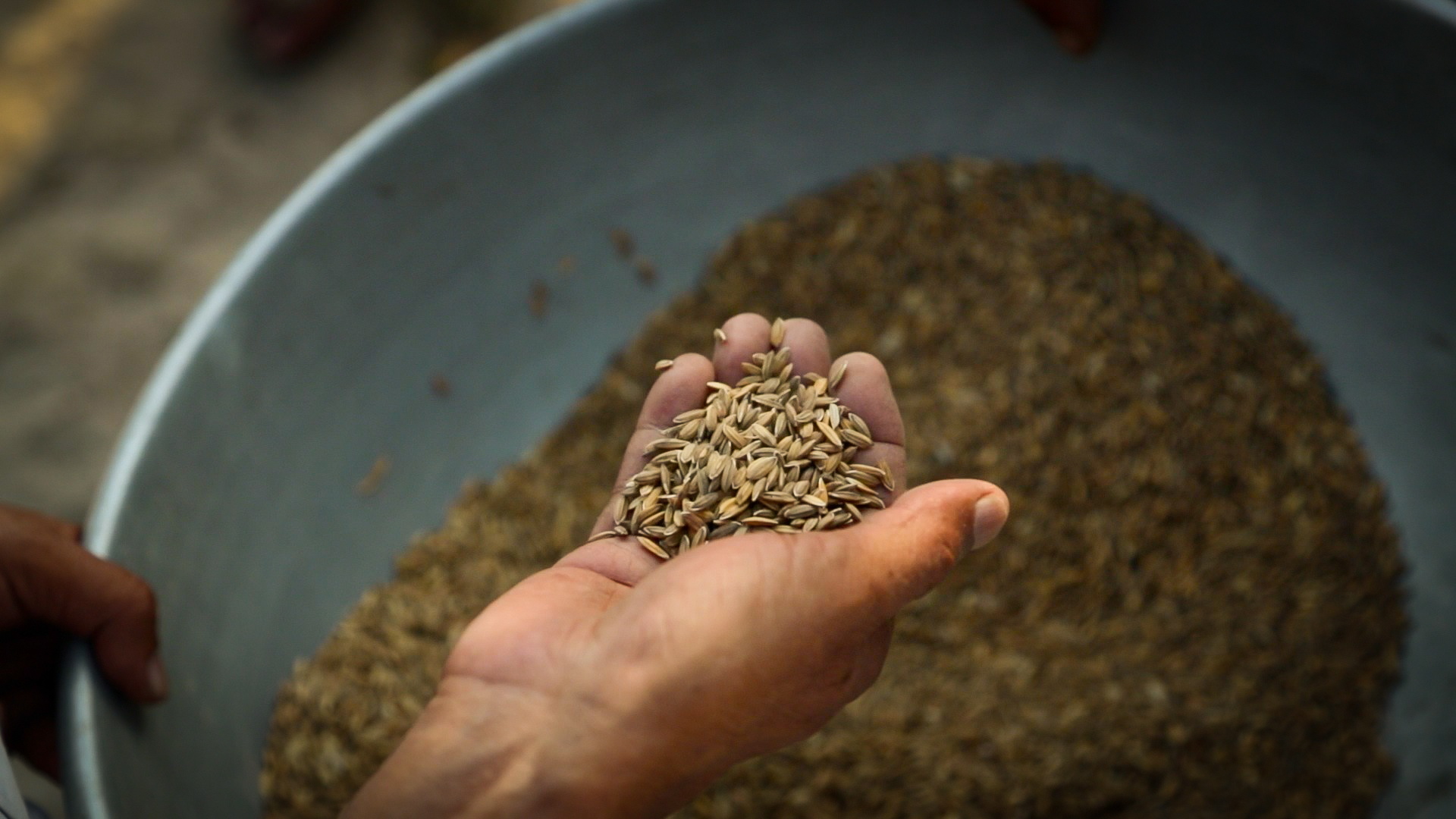
In India, many farmers are returning to their traditional rice varieties, which often perform better than modern strains in salty soils. Meanwhile, scientists are working to incorporate salt tolerance into high-yielding varieties as stronger storms and rising seas increase the salinity of coastal fields. Photo by Sam Eaton.
One of the goals of the “Food for 9 Billion” project has been to show that keeping our growing number of selves fed (sustainably, equitably, healthily) is more than just a technical challenge.
That’s because food intersects with just about everything we humans do. It is social and cultural and political and economic. It’s about health and justice and demographics and taste. It ties us to our land and water and climate, and to the gazillions of non-human beings who share our planet.
But the technical stuff matters, too. Certainly for better-off producers and consumers, for whom small changes can have enormous consequences. But especially, I think, for small-scale, low-income farmers in developing countries, where demand is growing the fastest, productivity is growing the slowest, undernourishment is the highest, and the strains on resources are most severely felt.
Often, after these stories air, listeners or viewers write to tell us that we’re missing the point, that the real problem is ___________. The blank may be any number of things – population growth, poverty, lack of access to markets or land or credit or political power. No technology will help until we deal with that.
In a recent blog post in Grist, Tom Laskawy reports on efforts to get geeky tech types to turn their attention to improving the food system, then warns that it’s folly to expect technology to ensure “that adequate food is produced in a sustainable way for a growing population.” The piece carries the headline “When it comes to food, technology won’t save us.”
Fine. But no single thing will, and it would be a shame for people to stop innovating because their particular insight or gadget or method isn’t going to save the world on its own.
I think the agroecologists have it right – the world is complex. Everything interacts with everything else. Conditions differ in important ways from place to place, and they change over time. No single technology will work everywhere. Scratch that: no single technology will work anywhere.
That’s not to say that “all of the above” is the best way forward – some technologies, like some policies or ideas, are inappropriate or dangerous or counterproductive. But it’s unlikely that “none of the above” is the answer, either.
And so we’re left with “lots of the above.” Better laws, better seeds, better education, better growing methods, better financial services, better roads, better data, better trade policies, better safety nets.
I never give a journalist grief for a headline (I rarely get to write mine), but maybe a better title for Laskawy’s piece (and, for that matter, for “Food for 9 Billion”) would be “When it comes to food, ________ won’t save us.”
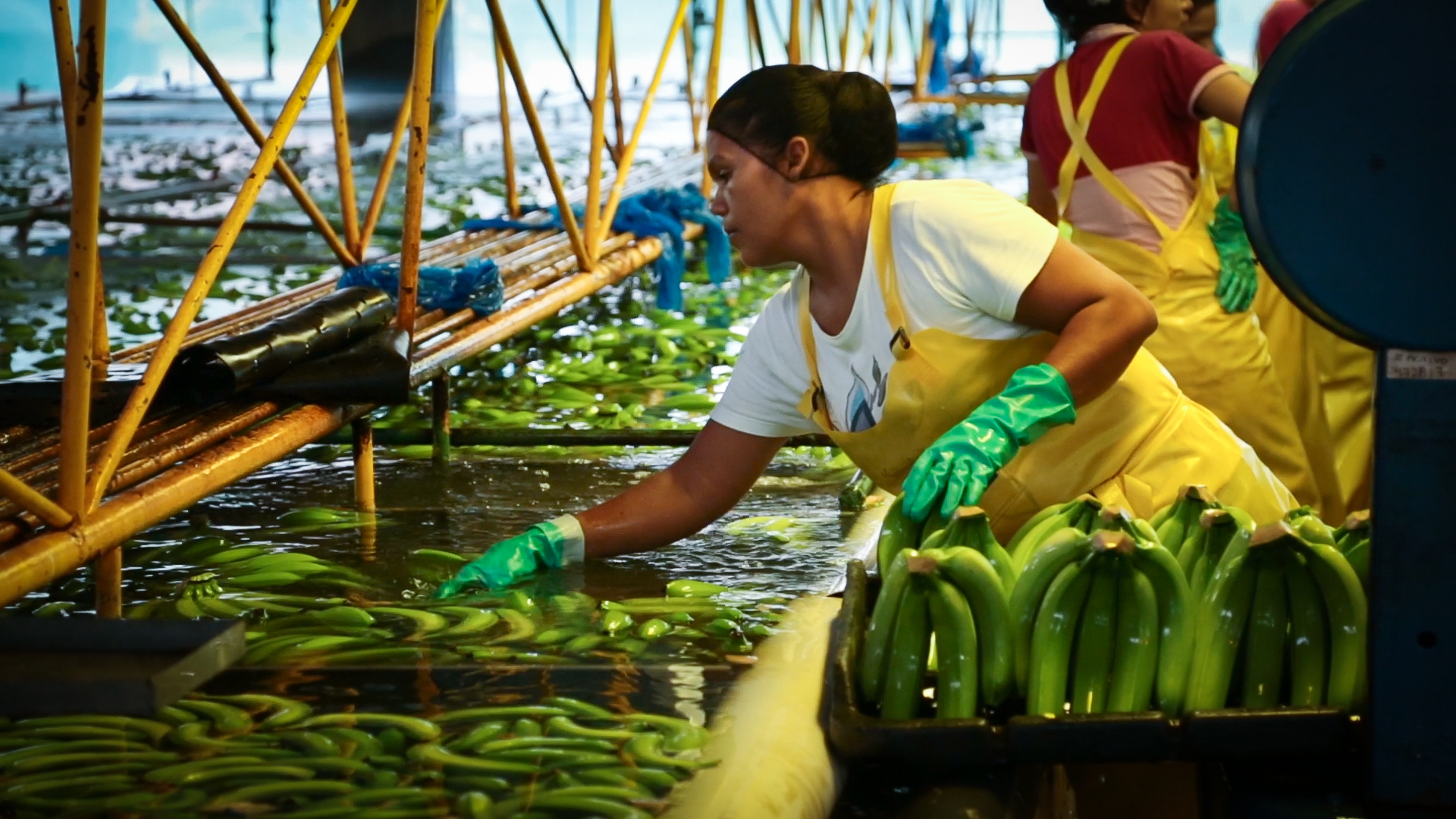
Dole, the world’s largest fruit and vegetable producer, is attempting to achieve carbon neutrality in its entire Costa Rica supply chain. It has reduced water use in processing facilities like this one by as much as 80 percent. And it’s cut nitrous oxide emissions from fertilizer in half. Photo: Sam Eaton/Homelands Productions.
Food production, from farm to table, generates more than a quarter of the world’s greenhouse gas emissions. It’s a vicious circle, because climate change is one of the biggest challenges facing farmers today.
In Costa Rica, farming accounts for a whopping 37 percent of all emissions. Since proclaiming four years ago that it would become the world’s first carbon-neutral nation by 2021, the country has become a laboratory for climate-friendly agriculture. Scientists, small-scale farmers and industrial plantations are all taking part.
Retired schoolteacher Anne Mary Mabira, 85, with her backyard aquaponics system in Kampala, Uganda. In aquaponics, fish fertilize water for vegetables and vegetables filter water for fish. The technology has been gaining traction in the US, but is still virtually unknown in Africa. Photo: Jon Miller/Homelands Productions.
Today, Homelands’ Jon Millermeets Charles Mulamata, a Ugandan engineer and entrepreneur who’s trying to spark a revolution in aquaponics, a super-efficient (but slightly intimidating) method for producing vegetables and fish in small spaces.
Upcoming stories are from India, China, Costa Rica, the Netherlands and Seattle, and look at issues ranging from human waste recycling to meat alternatives to urban foraging.
We’ve had a slew of stories broadcast since our last blog post. This past Monday, The World’s Mary Kay Magistad shared a meatless meal with Long Kuan, a Beijing-based pop singer who is promoting vegetarianism and veganism in meat-mad China. Last Thursday, independent producer Sam Eaton reported from Mexico on efforts to revive amaranth, a hardy and nutritious crop that once rivaled corn in importance. And last Monday, Jon Miller sent a dispatch from Qatar, where an international team of scientists is testing a suite of interlocking technologies to produce food, fresh water and energy in harsh desert areas.
In fact, if you keep clicking the “next” button at the bottom of the page, you’ll find a trove of radio and TV stories, videos, blog posts and interactive features going back to November 2011.
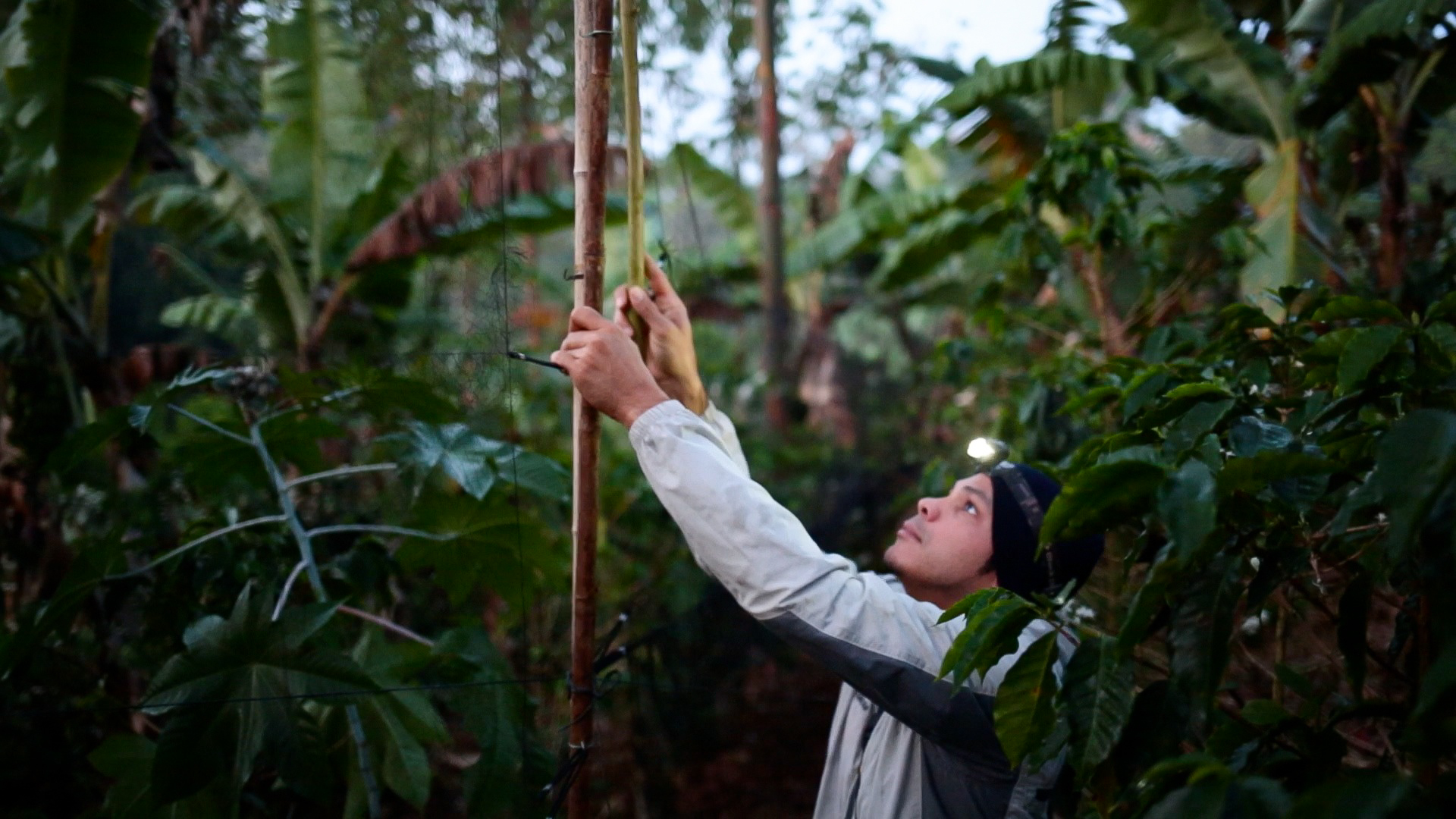
A Stanford University research technician erects a net on a Costa Rican coffee farm. The team has identified more than 100 species of birds on farms and associated patches of forest as part of a project to calculate the value of biodiversity. Photo: Sam Eaton/Homelands Productions.
Today on the NewsHour, Sam Eaton visits Costa Rica, where farmers and researchers are finding that biodiversity isn’t just good for the environment, but also boosts productivity and profits. Also today, on The World, Mary Kay Magistad eats a meal with the organizers of a grassroots campaign to cut down on food waste in China, where leaving food on your plate is a sign that you’ve made it.
Tuesday on the NewsHour, Jon Miller travels to Qatar to visit a high-tech experiment in transforming sunlight, seawater and carbon dioxide into food, fuel and fresh water. On Wednesday, also on the NewsHour, Sam reports on an ultra-efficient vertical vegetable farm in Singapore.
On Thursday, Jon reports for The World from Uganda, where scientists and activists have staked out very different positions on genetically engineered virus-resistant cassava. Also on Thursday, on the NewsHour,Sam visits farmers in India who are returning to their traditional seeds to protect themselves against the ravages of climate change.
Finally, on the NewsHour on Friday, Serene Fang and Susanne Rust of the Center for Investigative Reporting look at California’s resource-hungry dairy industry, which is turning to China as domestic markets dry up.
As always, if you can’t catch the stories on the day of broadcast, they will all be archived at Foodfor9Billion.org, along with slideshows, interactive graphics and other goodies.
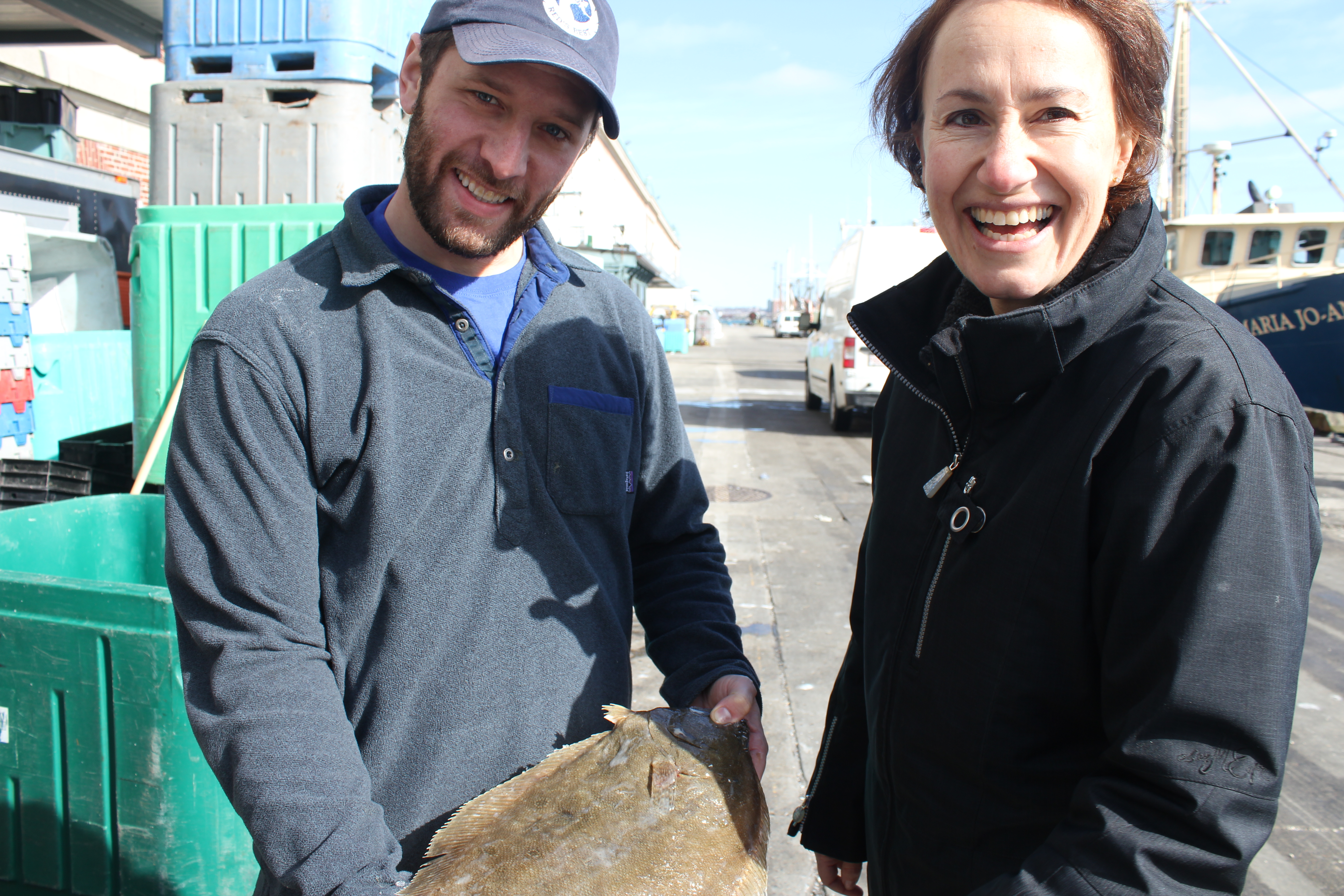
Helene York, right, of the food service company Bon Appétit, works with suppliers and chefs to reduce the climate impact of the meals served at the company’s roughly 500 cafeterias. Jared Auerbach, of Red’s Best Seafood in Boston, recently began to sell fresh, locally caught fish to area companies and institutions. Photo: Jon Miller/Homelands Productions.
By now most of us know that what we eat has an impact on the environment. And so more of us are putting our money where our mouths are—or our mouths where our money is—ordering green-listed seafood at restaurants or shopping at our local farmers’ market.
Those choices add up. After all, each of us eats more than 1,000 meals over the course of a year. Still, what you or I have for lunch today probably isn’t going to change the world.
But what if you served up 145 million meals a year? Jon Miller met someone who does—and who’s trying to make it count.
The story airs today, June 6, as part of the “What’s for Lunch” series on PRI’s The World. Listen for it on the radio or catch it later online, where you can find photos and links to other stories.
And a heads up for next week: PBS NewsHour will air one story per day in a veritable “Food for 9 Billion” extravaganza. On Monday, Sam Eaton takes us to Costa Rica, where scientists and farmers are learning the long-term value of biodiversity.
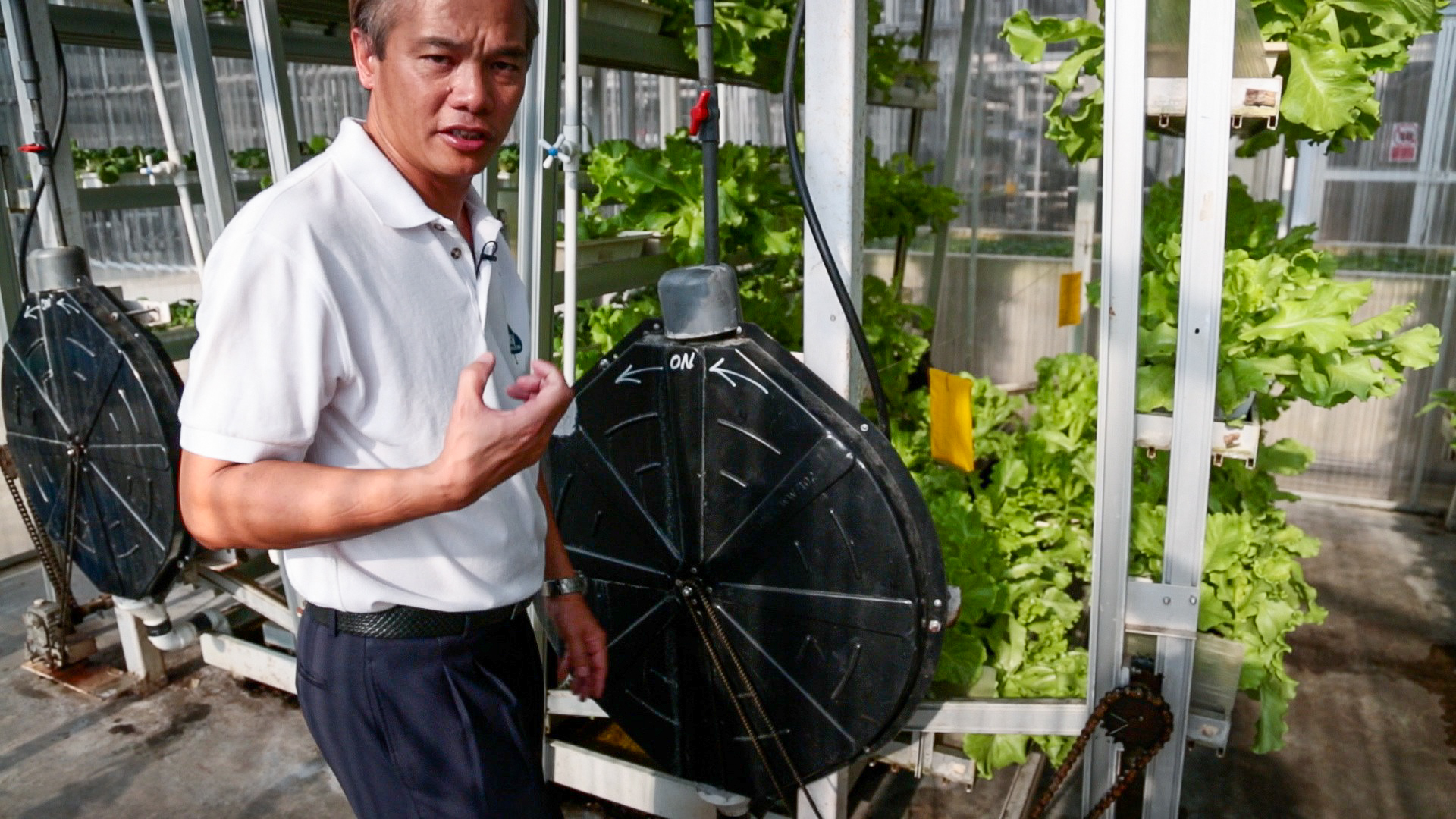
Engineer-entrepreneur Jack Ng shows off a water-powered system he designed for his vertical farm, called SkyGreens, in Singapore. The plants are grown in composted food waste. Around the world, farmers are finding ways to produce food using less land, water and fossil fuel. Photo by Sam Eaton/Homelands Productions.
For the last year and a half, the “Food for 9 Billion” project has examined the many-sided challenge of keeping ourselves fed at a time of rapid social and environmental change. Yesterday we launched a new chapter, called “What’s for Lunch,” a series of features on PRI’s The World and PBS NewsHour that look at the connections between what we eat and our changing climate.
In our first piece, producer Sam Eaton visits SkyGreens, a super-efficient vertical farm in the heart of Singapore. A companion piece will air next week on the NewsHour. For a taste of what else is coming, check out this blog post from The World’s environment editor, Peter Thomson.
We’re using the hashtag #Whats4Lunch on Twitter and Instagram. If you’re an Instgrammer, you can upload a photo of your climate-changed lunch along with an explanation of how it’s different.
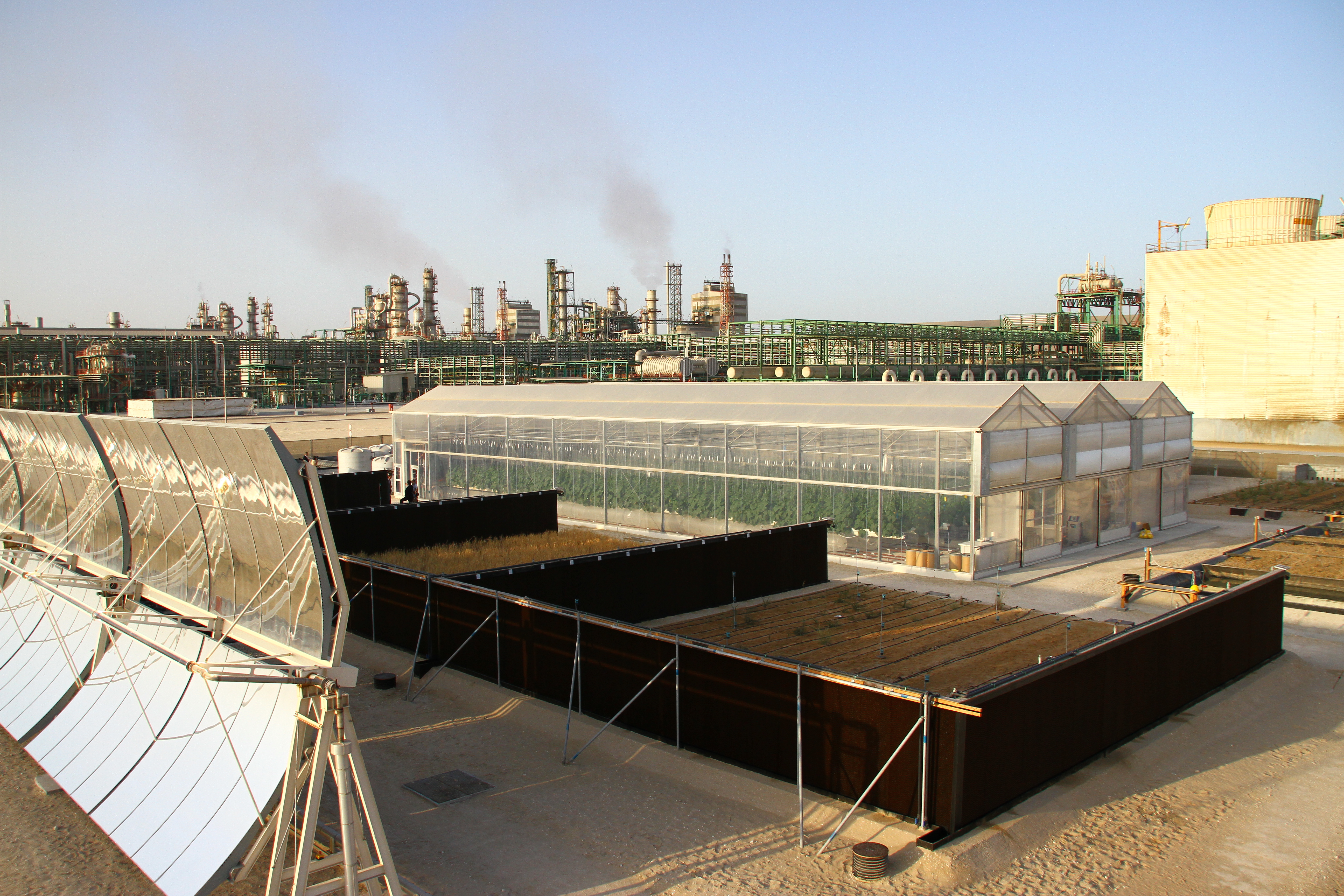
The Sahara Forest Project facility in Qatar uses seawater and sunlight to produce vegetables, energy, fresh water, desert plants, animal feed and salt. Photo by Elsa Naumann/Sahara Forest Project.
Reporters Jonathan Miller, Sam Eaton and Mary Kay Magistad have been in Mexico, Costa Rica, India, Singapore, China, Qatar, Uganda and the Netherlands gathering tape for a series of radio and TV stories about the future of food in a climate-changed world. Topics will include alternatives to meat, alternative staples, GMOs, traditional seeds, foraging, vertical farming, agroecology, aquaponics, aquaculture, carbon-neutral farming and agrobiodiversity. Oh, and low-carbon cafeteria meals.
We love collaborating with other people, projects, and organizations. We also serve as fiscal sponsor for projects that align with our mission. If you’d like to explore how we might work together, send us a note at info@homelands.org.
Our work would be impossible without the generosity of supporters who share our commitment to high-quality public-interest journalism. Please donate online or visit our support page for more options.