Image
Retired schoolteacher Anne Mary Mabira, 85, with her backyard aquaponics system in Kampala, Uganda. In aquaponics, fish fertilize water for vegetables and vegetables filter water for fish. The technology has been gaining traction in the US, but is still virtually unknown in Africa. Photo: Jon Miller/Homelands Productions.

Keep your ears open for a new batch of What’s for Lunch radio stories about food and climate change on PRI’s The World. The series, part of the Food for 9 Billion project that Homelands Productions is producing with the Center for Investigative Reporting, airs Mondays and Thursdays through most of July.

Today, Homelands’ Jon Miller meets Charles Mulamata, a Ugandan engineer and entrepreneur who’s trying to spark a revolution in aquaponics, a super-efficient (but slightly intimidating) method for producing vegetables and fish in small spaces.

If you miss it on the air, you can find it online on The World’s What’s for Lunch series page.

Upcoming stories are from India, China, Costa Rica, the Netherlands and Seattle, and look at issues ranging from human waste recycling to meat alternatives to urban foraging. 

We’ve had a slew of stories broadcast since our last blog post. This past Monday, The World’s Mary Kay Magistad shared a meatless meal with Long Kuan, a Beijing-based pop singer who is promoting vegetarianism and veganism in meat-mad China. Last Thursday, independent producer Sam Eaton reported from Mexico on efforts to revive amaranth, a hardy and nutritious crop that once rivaled corn in importance. And last Monday, Jon Miller sent a dispatch from Qatar, where an international team of scientists is testing a suite of interlocking technologies to produce food, fresh water and energy in harsh desert areas.

You can catch Jon’s TV story about the Qatar project on the Food for 9 Billion website. While you’re there, you can watch the four other features we produced (from SingaporeIndiaCosta Rica and California) for PBS NewsHour on the week of June 10, and hear all the radio stories that have aired to date on The World, including reports on vertical farming in Singapore, China’s “clean your plate” campaign, industrial-scale low-carbon eating in Boston and the debate over GMOs in Uganda.

In fact, if you keep clicking the “next” button at the bottom of the page, you’ll find a trove of radio and TV stories, videos, blog posts and interactive features going back to November 2011.
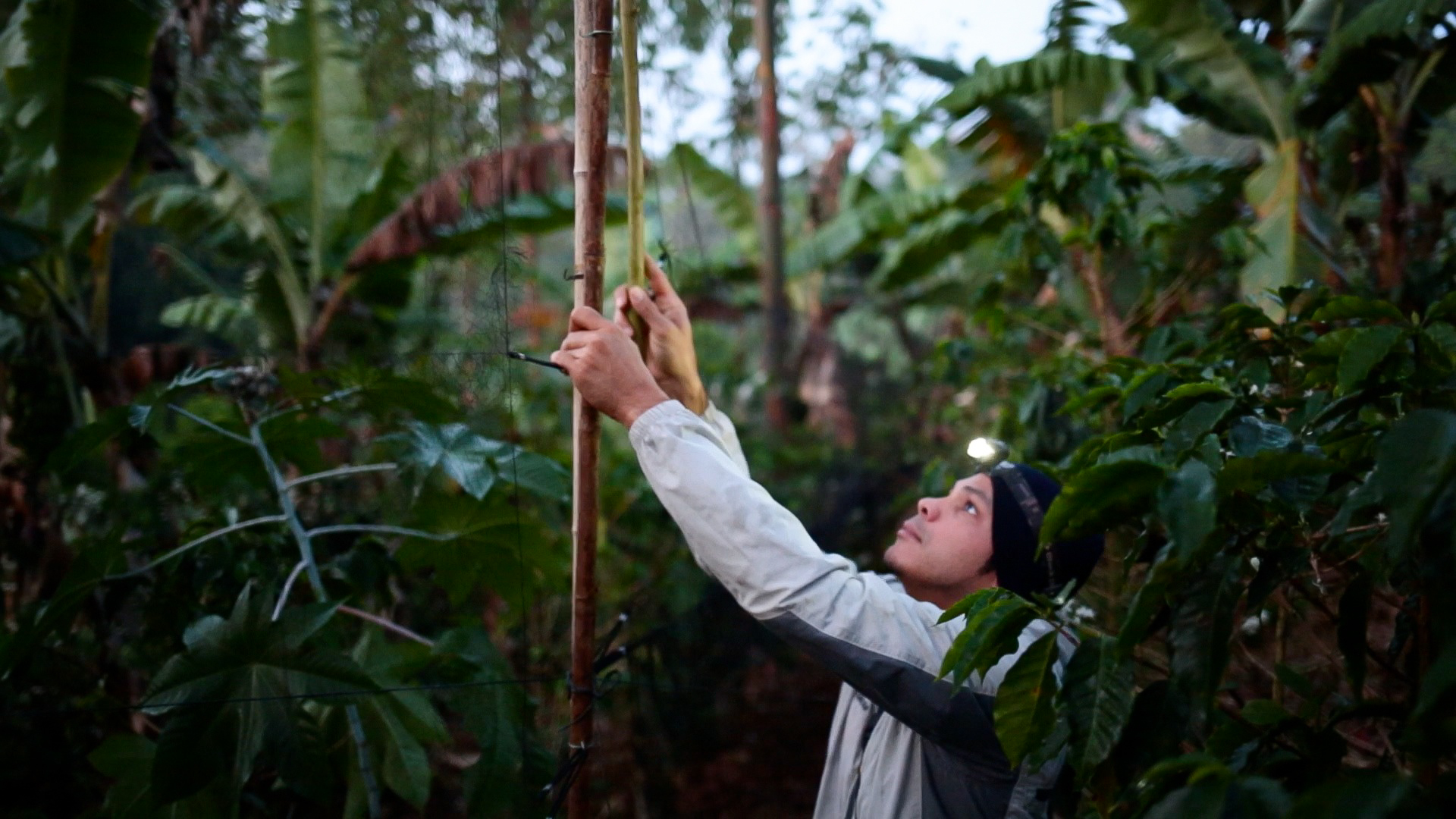
 

Researcher
A Stanford University research technician erects a net on a Costa Rican coffee farm. The team has identified more than 100 species of birds on farms and associated patches of forest as part of a project to calculate the value of biodiversity. Photo: Sam Eaton/Homelands Productions.

It’s the biggest week yet for the “Food for 9 Billion” project, with five stories scheduled to air on PBS NewsHour and two on PRI’s The World.

Today on the NewsHour, Sam Eaton visits Costa Rica, where farmers and researchers are finding that biodiversity isn’t just good for the environment, but also boosts productivity and profits. Also today, on The World, Mary Kay Magistad eats a meal with the organizers of a grassroots campaign to cut down on food waste in China, where leaving food on your plate is a sign that you’ve made it.

Tuesday on the NewsHour, Jon Miller travels to Qatar to visit a high-tech experiment in transforming sunlight, seawater and carbon dioxide into food, fuel and fresh water. On Wednesday, also on the NewsHour, Sam reports on an ultra-efficient vertical vegetable farm in Singapore.

On Thursday, Jon reports for The World from Uganda, where scientists and activists have staked out very different positions on genetically engineered virus-resistant cassava. Also on Thursday, on the NewsHour, Sam visits farmers in India who are returning to their traditional seeds to protect themselves against the ravages of climate change.

Finally, on the NewsHour on Friday, Serene Fang and Susanne Rust of the Center for Investigative Reporting look at California’s resource-hungry dairy industry, which is turning to China as domestic markets dry up.

As always, if you can’t catch the stories on the day of broadcast, they will all be archived at Foodfor9Billion.org, along with slideshows, interactive graphics and other goodies.

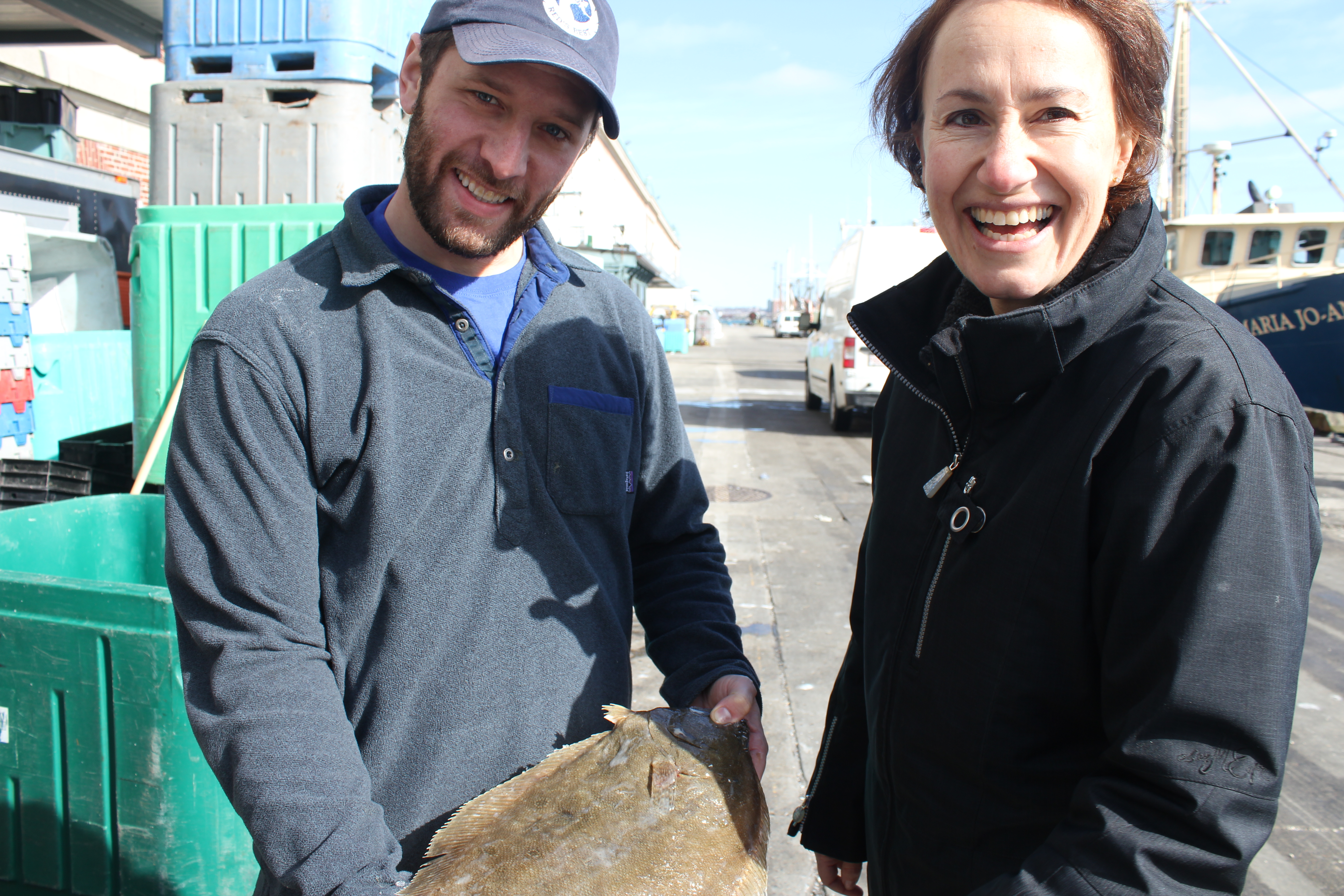
Boston Fish Pier
Helene York, right, of the food service company Bon Appétit, works with suppliers and chefs to reduce the climate impact of the meals served at the company’s roughly 500 cafeterias. Jared Auerbach, of Red’s Best Seafood in Boston, recently began to sell fresh, locally caught fish to area companies and institutions. Photo: Jon Miller/Homelands Productions.

By now most of us know that what we eat has an impact on the environment. And so more of us are putting our money where our mouths are—or our mouths where our money is—ordering green-listed seafood at restaurants or shopping at our local farmers’ market.

Those choices add up. After all, each of us eats more than 1,000 meals over the course of a year. Still, what you or I have for lunch today probably isn’t going to change the world.

But what if you served up 145 million meals a year? Jon Miller met someone who does—and who’s trying to make it count.

The story airs today, June 6, as part of the “What’s for Lunch” series on PRI’s The World. Listen for it on the radio or catch it later online, where you can find photos and links to other stories.

And a heads up for next week: PBS NewsHour will air one story per day in a veritable “Food for 9 Billion” extravaganza. On Monday, Sam Eaton takes us to Costa Rica, where scientists and farmers are learning the long-term value of biodiversity.

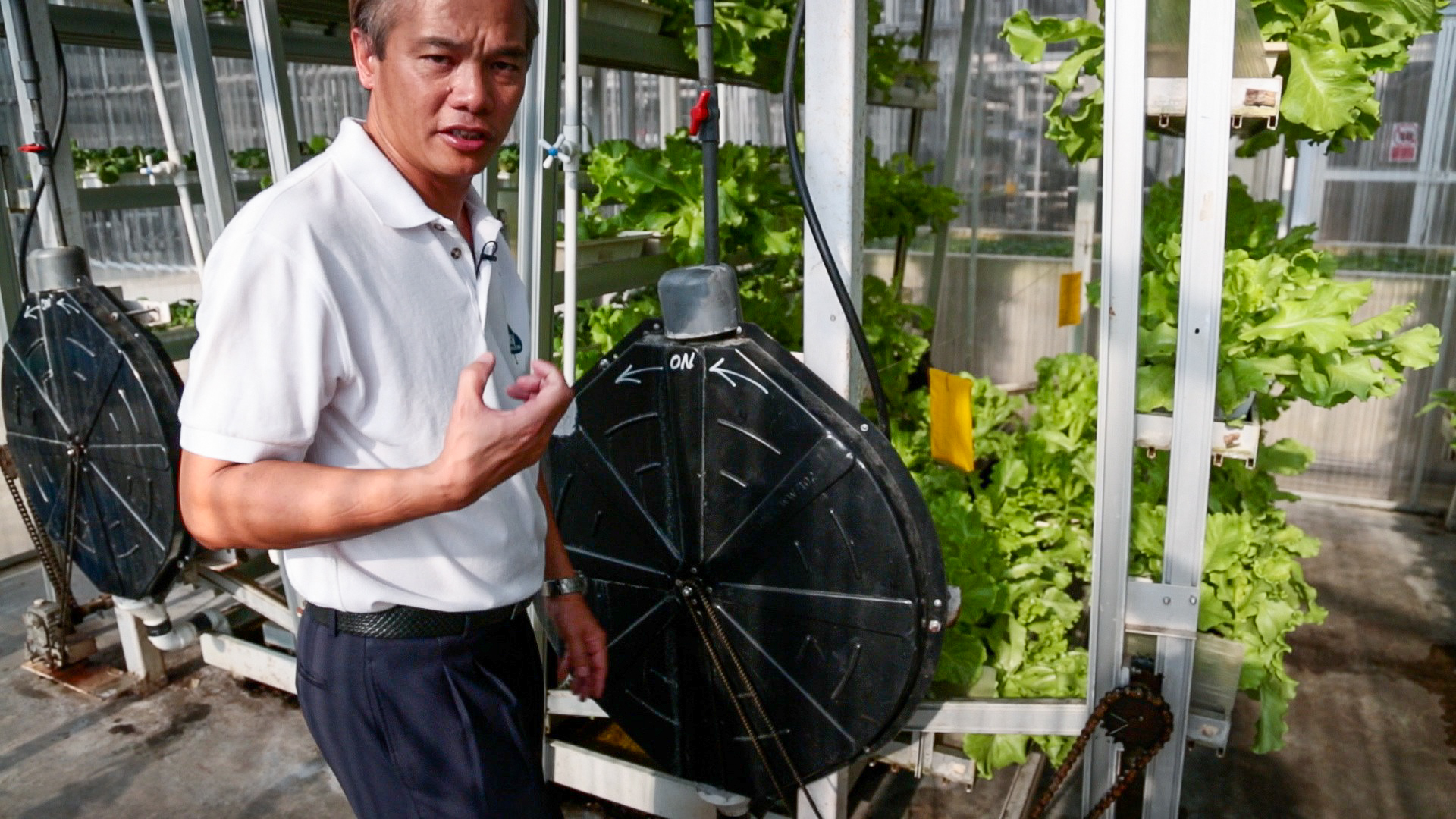
Jack Ng at SkyGreens in Singapore
Engineer-entrepreneur Jack Ng shows off a water-powered system he designed for his vertical farm, called SkyGreens, in Singapore. The plants are grown in composted food waste. Around the world, farmers are finding ways to produce food using less land, water and fossil fuel. Photo by Sam Eaton/Homelands Productions.

For the last year and a half, the “Food for 9 Billion” project has examined the many-sided challenge of keeping ourselves fed at a time of rapid social and environmental change. Yesterday we launched a new chapter, called “What’s for Lunch,” a series of features on PRI’s The World and PBS NewsHour that look at the connections between what we eat and our changing climate.

In our first piece, producer Sam Eaton visits SkyGreens, a super-efficient vertical farm in the heart of Singapore. A companion piece will air next week on the NewsHour. For a taste of what else is coming, check out this blog post from The World’s environment editor, Peter Thomson.

We’re using the hashtag #Whats4Lunch on Twitter and Instagram. If you’re an Instgrammer, you can upload a photo of your climate-changed lunch along with an explanation of how it’s different.

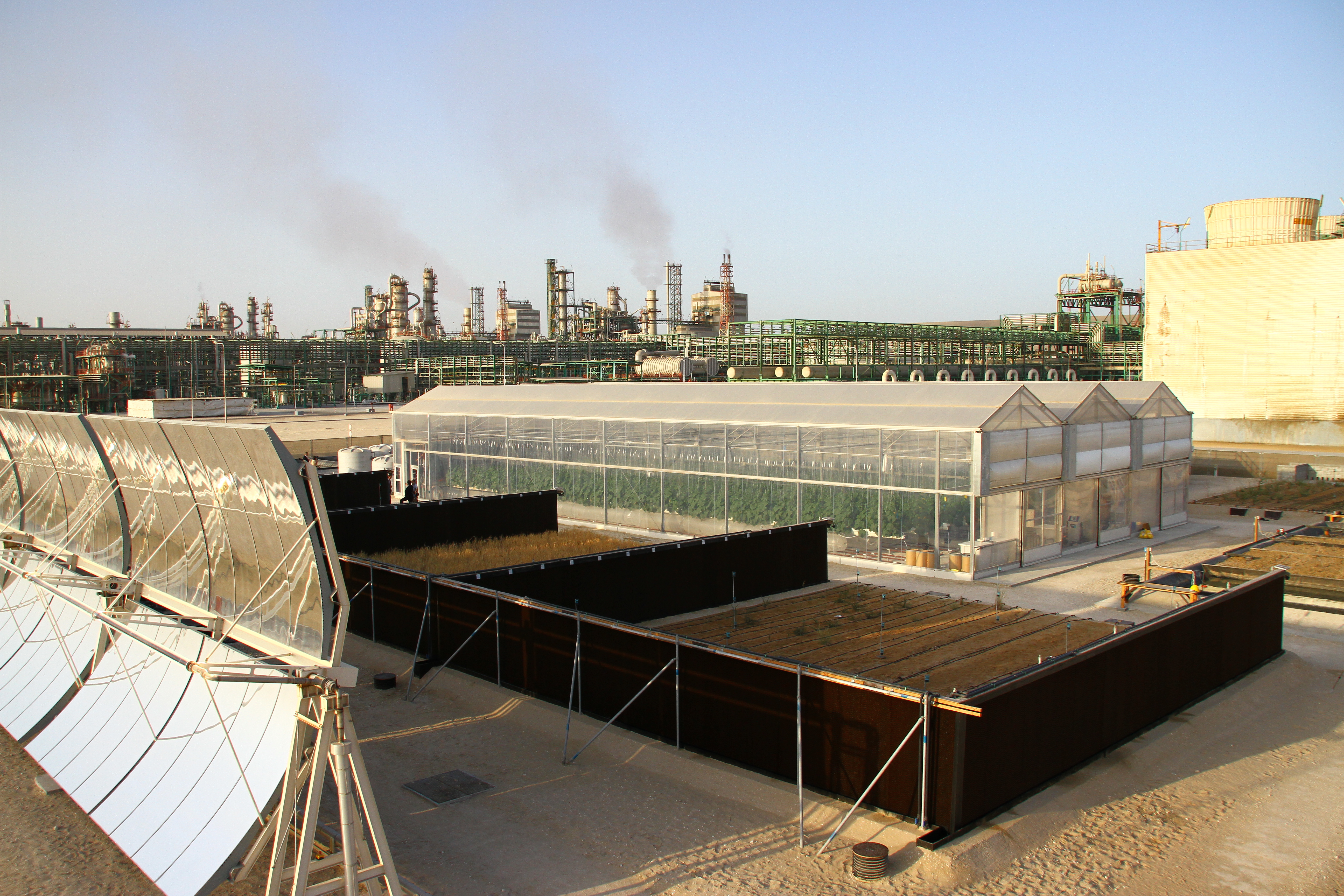
Image
The Sahara Forest Project facility in Qatar uses seawater and sunlight to produce vegetables, energy, fresh water, desert plants, animal feed and salt. Photo by Elsa Naumann/Sahara Forest Project.

Reporters Jonathan MillerSam Eaton and Mary Kay Magistad have been in Mexico, Costa Rica, India, Singapore, China, Qatar, Uganda and the Netherlands gathering tape for a series of radio and TV stories about the future of food in a climate-changed world. Topics will include alternatives to meat, alternative staples, GMOs, traditional seeds, foraging, vertical farming, agroecology, aquaponics, aquaculture, carbon-neutral farming and agrobiodiversity. Oh, and low-carbon cafeteria meals.

The series, part of the “Food for 9 Billion” project, will air on PRI’s The World and PBS NewsHour beginning in June. For updates, follow the project  (and look for the #Foodfor9Billion hashtag) on Twitter.

The Homelands blog may have been idle, but that doesn’t mean we have been! Clearly, though, it’s time for a quick catching up.

School snack bar in Crete
Many schools in Crete have voluntarily banned soft drinks and sweets from their snack bars. The percentage of overweight children in Greece is higher than in the US. Photo by Jon Miller.

In October, Jon Miller’s feature Greece’s diet crisis aired on Marketplace as part of the “Food for 9 Billion” project. The story looked at the rapid rise of obesity in Crete, home to one of the world’s healthiest traditional diets. In November, Mary Kay Magistad (China correspondent for our new radio partner, PRI’s The World; more about that below) joined forces with Cassandra Herrman and Serene Fang at the Center for Investigative Reporting on China strains to satisfy growing demand for meat, which aired on PBS NewsHour.

Then, just before the holidays in December, Jon’s piece Taking the climate fight to the table aired on Marketplace. That story, which looked at how our own eating decisions might affect the world’s ability to feed itself, wrapped up our fruitful and enjoyable year-long partnership with Marketplace (a shout-out to our excellent editors Ben Adair, George Judson and Sitara Nieves).

For the last few months we’ve been laying the groundwork for a second phase of Ff9B — a series of ten or more stories for The World, to air in a two- or three-week burst this spring. The topic is much more focused than what we’ve done so far; we sometimes describe it as “the future of food in a climate-changed world.” Jon Miller and Sam Eaton will do most of the reporting; as we write this, they’re madly preparing for trips to Singapore, India, Mexico, Costa Rica, Uganda, The Netherlands and Qatar. We also expect to continue working with CIR on a handful of companion pieces for PBS NewsHour.

Group photo
Homelands producers Alan Weisman, Sandy Tolan, Jonathan Miller, Cecilia Vaisman and Beckie Kravetz (Alan’s wife) in Los Angeles in January.

Finally, in January, Sandy, Cecilia, Alan and Jon descended on Sandy’s place in Los Angeles for a weekend retreat. We are spread around the country (western Massachusetts, upstate New York, Chicago, LA) and rarely find ourselves together in the same place. It was wonderful to talk and plan and recharge each other’s creative batteries. A highlight was a party on Saturday night for a few dozen radio friends in LA. Being radio people, nobody thought to take any pictures.

The supermarket revolution is sweeping across Africa, transforming everything from the way people eat to the crops farmers grow. Is this good news for the continent’s poor? That’s the question posed by the latest “Food for 9 Billion” segment airing today on American Public Media’s Marketplace.

American, European and African-owned supermarkets are spreading quickly across Africa. This store in Zambia is part of South Africa’s Pick n Pay chain. Photo by Gretchen L. Wilson/Homelands Productions

For urban consumers, supermarkets are convenient, clean and cheap. They offer fresh and packaged food from around the world at any time of year, often at prices that rival those of open-air markets. While their appeal is especially strong among the middle and upper classes, they’re increasingly popular with low-income shoppers.

The calculus is different for small-scale farmers, who still make up the majority of Africa’s poor. For some, supermarkets represent a golden opportunity, offering higher prices and better terms than traditional buyers. But for others, particularly poorer farmers in more remote areas, supermarkets aren’t just out of reach—they pose an existential threat. Ditto for market vendors, small-time transporters and millions of others in the informal food economy.

Many development specialists and government officials hope that supermarkets will help make Africa’s food systems more productive and efficient. By spurring investment in agriculture and rural infrastructure, the thinking goes, foreign chains will more than offset the profits they send back home. But others worry that big companies will squeeze out smaller local suppliers, undercutting Africa’s most important economic sector. And while supermarkets offer consumers exciting new choices, they tend to reduce diversity of both diets and ecosystems, and to encourage the consumption of unhealthy processed foods.

In today’s story, Gretchen Wilson travels to Zambia, where a strong farmers’ union and government regulations have helped ensure that foreign-owned supermarkets source much of their produce from local suppliers. Then she visits the mountain kingdom of Lesotho, where farmers enjoy no such protection and many are finding it hard to compete with industrial farms and large food processors from South Africa and beyond.

Also, check out Gretchen’s blog post about the many other challenges farmers face in southern Africa.

Image
Workers at La Laiterie du Berger in Senegal weigh and filter milk before transforming it into yogurt. The company collects milk from isolated herders who have no other way to get it to consumers. Photo by Jori Lewis for Homelands Productions.

With drought, storms, pests, diseases, poverty and a plethora of other constraints, it’s hard enough for the world’s farmers and fishers to keep us all fed. It hardly seems fair that one-third or more of what they produce goes uneaten.

Not that it’s just a question of fairness. Consider the cost in land, water, labor, fuel, money and greenhouse gases. If we’re going to feed 9 billion people by the middle of the century, and not destroy the planet in the process, cutting down on waste seems like a smart place to start.

Today on Marketplace, the “Food for 9 Billion” project looks at two very different worlds of waste. First, reporter Jori Lewis travels to a remote area of Senegal, where cattle herders throw away much of the milk their cows produce because they have no way to get it to market. Then Adriene Hill visits an elementary school near Los Angeles, where lots of the milk kids take with their lunches ends up in the trash.

The stories echo the dual nature of the food waste challenge: In poor countries, most losses occur on the farm or in transit and storage, while in rich countries, the waste is greatest at the consumer end.

What’s to be done? That depends on where in the world you are.

If you can’t catch the show, look for audio, transcripts and photos on Marketplace.org and Foodfor9Billion.org this afternoon. In the meantime, check out Adriene Hill’s blog post on the global food waste problem.