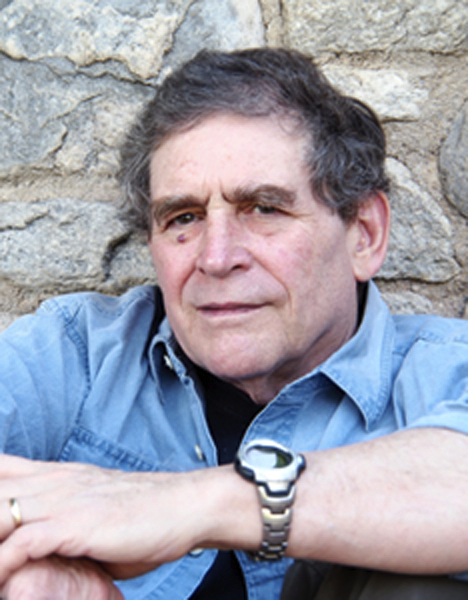
We’re thrilled to announce the publication of Countdown: Our Last, Best Hope for a Future on Earth?, by Homelands senior producer and co-founder Alan Weisman. You should be able to find it in bookshops today, and if you pre-ordered it from an online seller, it should be on its way.
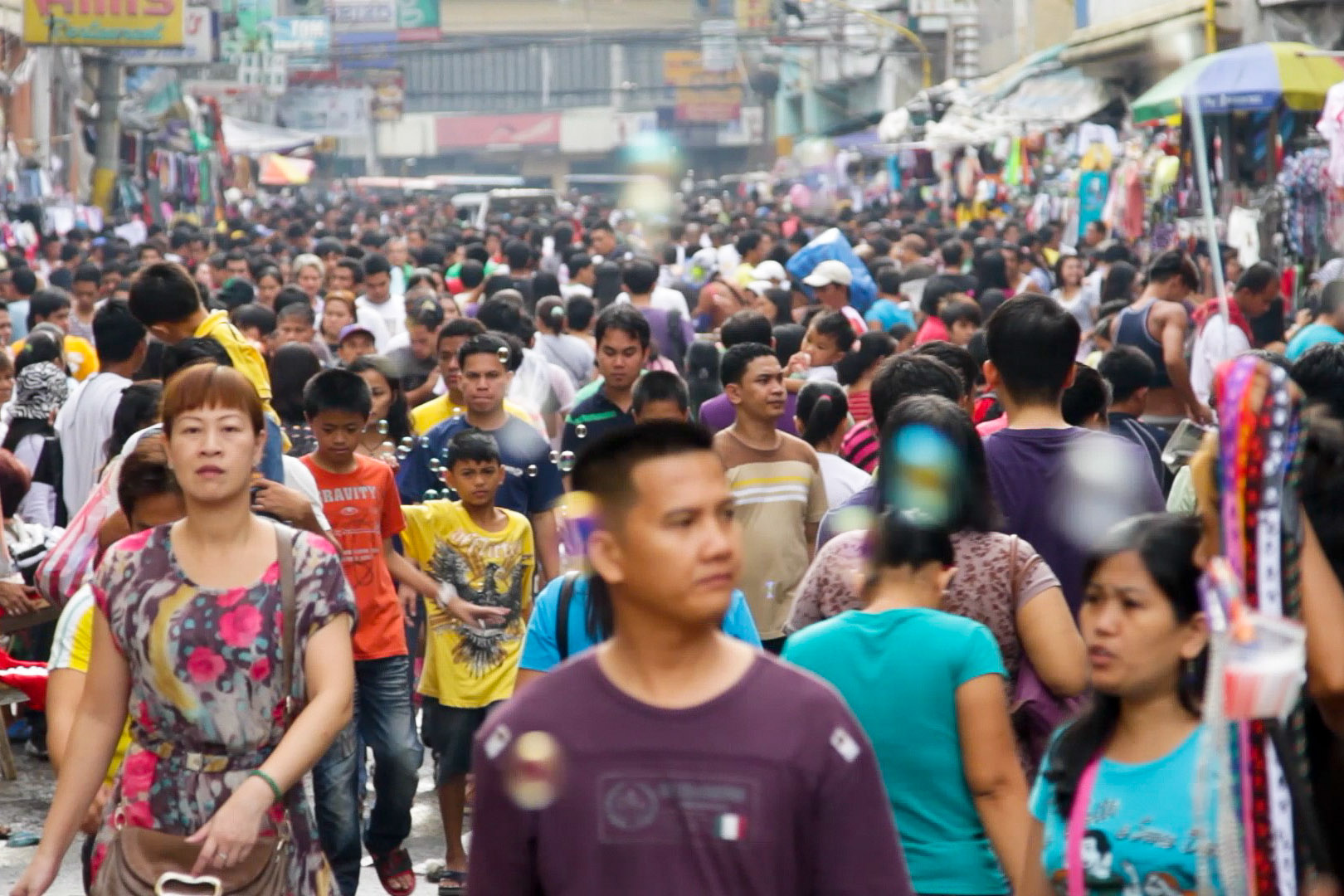
Every four and a half days, the world population goes up by another million. Photo by Sam Eaton.
Published by Little, Brown and Co., Countdown is Alan’s sixth book and a fitting sequel to his international bestseller, The World Without Us. In the earlier book, he looked at how the natural world might heal if freed from human pressure. In Countdown, he asks how we can bend our population curve to avoid a collision with the planet’s resource base.
If The World Without Us was a grand thought experiment, Countdown is an urgent – and practical – call to action.
Check out the book’s trailer (yes, it has a trailer!) here. Read an excerpt in Salon here. And see what the reviewers are saying here. Then go out and get a copy!
A listener contacted us after our story aired on PRI’s The World about entrepreneur Charles Mulamata’s effort to start an aquaponics business in his native Uganda. (Aquaponics is a combination of fish and vegetable farming that promoters say is more efficient and productive than conventional methods.) Geoff Platt, who develops aquaponics systems in Arizona, asked us to forward his contact information to Mulamata. Here’s what he wrote today:
Does good journalism change anything? Can words make an impact? Through this interview you may well have started something much larger than you could have imagined….
I am currently helping [Charles] develop several businesses. A mobile aquaponics van, a vertical farming system capable of much larger yields, a wood gas stove designed to reduce eye problems related to smoke exposure, and a bamboo farm to provide cheap, renewable wood to burn as well as continue to build the bicycles they make out of bamboo.
Charles Mulamata hopes to build an aquaponics facility on this plot near Kampala. Photo by Jon Miller.
He goes on to report that Mulamata, an engineer who has started several small businesses, has petitioned the Ugandan government for access to land on an island in the Nile to start an aquaponics research facility and tilapia nursery.
We have no idea how this will all turn out, but it’s great to be reminded that a six-minute radio story can catalyze real action on the other side of the world. We’ll keep you posted as things develop.
“Spirited descriptions, a firm grasp of complex material, and a bomb defuser’s steady precision make for a riveting read…. Weisman’s cogent and forthright global inquiry, a major work, delineates how education, women’s equality, and family planning can curb poverty, thirst, hunger, and environmental destruction. Rigorous and provoking.” —Donna Seaman, Booklist (starred review)
“In Countdown, Alan Weisman, a journalist probing whether a sustainable balance between nature and the human population can be achieved, offers a key message to guide future action.” —Nature
“This is not a jeremiad but a realistic, vividly detailed exploration of the greatest problem facing our species.” —Kirkus Reviews (starred review)
“Provocative and sobering, this vividly reported book raises profound concerns about our future.” —Publishers Weekly (starred review)
“Countdownis [Weisman’s] bold, troubling, and often inspiring search for ways to save ourselves.” —Men’s Journal
Here’s the press release from the publisher, Little, Brown and Company:
Alan Weisman’s previous book, “The World Without Us,” was a finalist for the National Book Critics Circle Award. It has been translated into 34 languages.
In his internationally bestselling book The World Without Us, Alan Weisman considered how the world could heal and even refill empty niches if relieved of humanity’s constant pressures. Behind that groundbreaking thought experiment was his hope that we would be inspired to find a way to add humans back to this vision of a restored, healthy planet—only in harmony, not mortal combat, with the rest of nature.
But with a million more of us approximately every 4 1/2 days on a planet that’s not getting any bigger, and with our exhaust overheating the atmosphere and altering the chemistry of our oceans, prospects for a sustainable future seem ever more in doubt. In Countdown: Our Last, Best Hope for a Future on Earth?, Alan Weisman’s long awaited follow-up book, he traveled to 21 countries to ask four questions that experts agreed were probably the most important on Earth—and also the hardest.
How many people can the Earth sustain?
If, in order to ensure our survival, we need to stop our growth before we hit 10 billion—or even reduce our numbers from our current 7 billion—is there an acceptable, nonviolent way to convince all of the world’s cultures, religions, nationalities, tribes, and political systems that it’s in their best interest to do so?
What kind of ecosystem is necessary to maintain human life, and what species or ecological processes are essential to our survival?
If a sustainable population on Earth is less than our current growth projection, or even less than our current number, how do we design an economy for a shrinking population, and then for a stable one—that is, for an economy not dependent on constant growth?
Truly a journalistic tour de force, Countdownis a riveting piece of narrative nonfiction that is impossible to put down, as compellingly entertaining to read as its message is urgent.
Weisman takes readers around the world to such diverse locales as Pakistan, a land the size of Texas whose numbers by midcentury will surpass today’s United States; the Philippines, where too many fishermen struggle to feed large families from increasingly depleted seas whose rising waters encroach on cropland; to Niger, with the world’s highest fertility rate, where each woman bears an average of seven to eight children; to Italy and Japan, where population has actually fallen below replacement rate: two children per two adults.
Weisman shares alarming projections about our ability to keep feeding growing multitudes, but he also reveals some startling successes, such as in Iran, where a voluntary family planning program dropped the highest rate of population growth in history to replacement level a year faster than China’s compulsory one-child policy.
By vividly detailing the burgeoning effects of our cumulative presence, Countdownreveals what may be the fastest, most acceptable, practical, technologically feasible, and affordable way of returning our planet and our presence on it to balance. Alan Weisman again shows that he is one of the most provocative journalists working today, with a book whose message is so compelling that it will change how we see our lives and our destiny.
The stories cited by the SEJ deal with the Fukushima disaster and the global threats of climate change. All were broadcast on PRI’s The World and were edited by Peter Thomson. Peter also edited the “What’s for Lunch” series of “Food for 9 Billion.”
In addition to producing the television features, our friends at CIR created an animated video called “The Hidden Costs of Hamburgers,” which has been viewed more than 184,000 times.
And of course all the partners blogged and tweeted as we went.
The project isn’t actually 100 percent finished. We’re still working on educational materials for high school students, and CIR plans to produce a long-form television feature about the food relationship between the US and China. We’ll keep you posted on those. We’ll also keep the Twitter account alive, at least for a while.
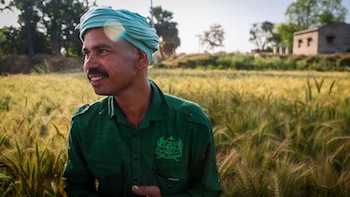
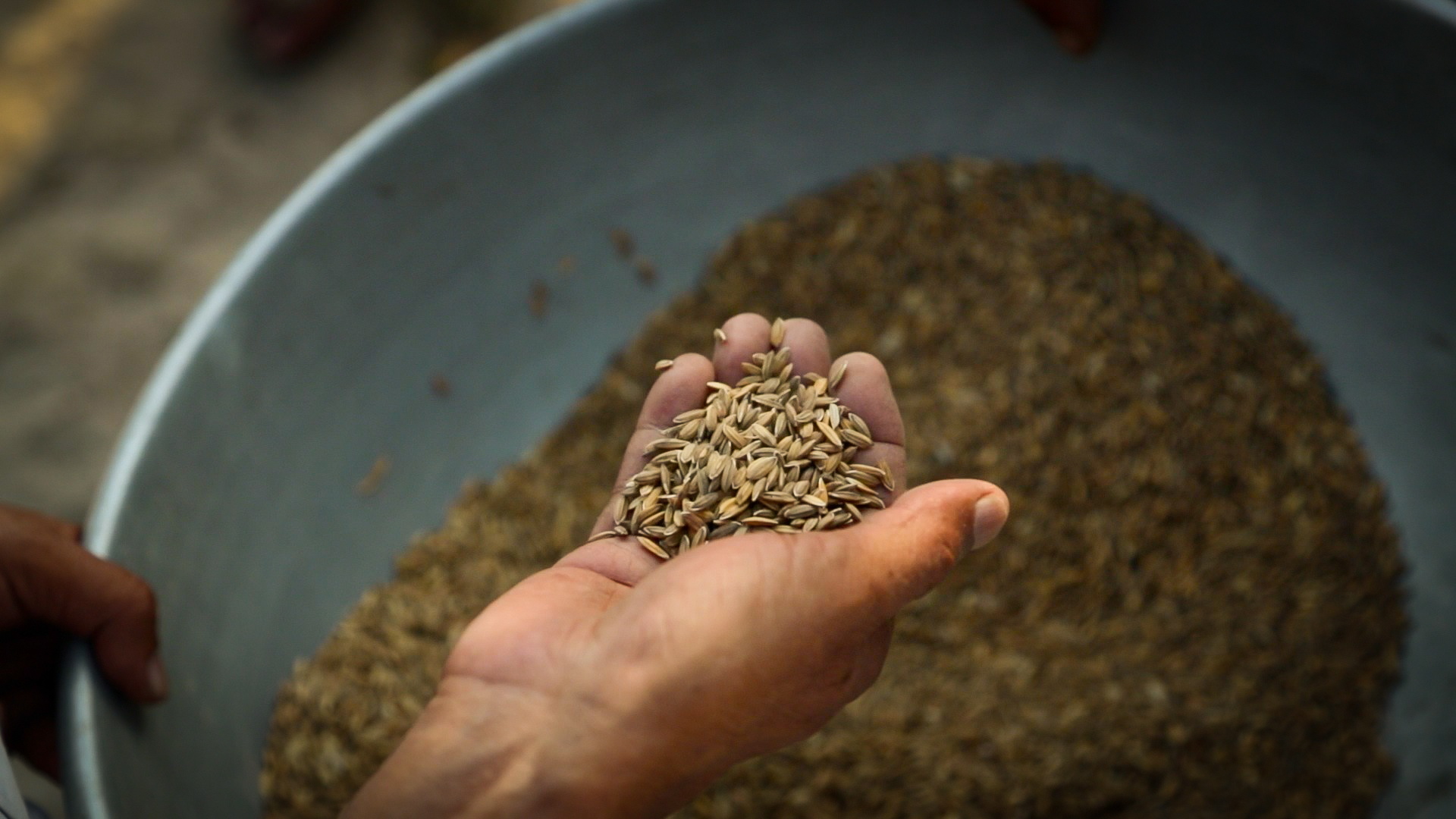
Sumant Kumar, a farmer in India’s Bihar State, recorded a world-record rice yield in 2012 using a method known as the System of Rice Intensification. He has applied the same techniques to his wheat crop. Photo by Sam Eaton.
The latest batch of “What’s for Lunch” stories on PRI’s The World highlight farming methods that don’t bust the global carbon budget.
On July 25, Sam Eaton reported from northeastern India on the System of Rice Intensification, which uses less water and fewer chemicals than conventional farming. The method has been spreading not just among rice growers, but also among producers of wheat and other crops. Still, some scientists are skeptical.
On July 15, Bianca Vazquez Toness met farmers in central India who are using human waste to fertilize their crops. Sewage contains high levels of valuable nitrogen and phosphorous, and putting it to use seems like a no-brainer: synthetic nitrogen is a major greenhouse gas polluter, phosphorous is increasingly scarce, and waste disposal is an enormous challenge in the developing world’s fast-growing cities. But human waste harbors dangerous microbes. The trick is to find ways to process and spread it without endangering consumers’ or farmworkers’ health.
On July 8, The World’s Mary Kay Magistad visited a Chinese inventor who has created what he believes may be the world’s most efficient irrigation system. China’s aquifers are in serious trouble; if farmers can radically reduce their water consumption, the country won’t need to import nearly as much of its food.
In India, many farmers are returning to their traditional rice varieties, which often perform better than modern strains in salty soils. Meanwhile, scientists are working to incorporate salt tolerance into high-yielding varieties as stronger storms and rising seas increase the salinity of coastal fields. Photo by Sam Eaton.
One of the goals of the “Food for 9 Billion” project has been to show that keeping our growing number of selves fed (sustainably, equitably, healthily) is more than just a technical challenge.
That’s because food intersects with just about everything we humans do. It is social and cultural and political and economic. It’s about health and justice and demographics and taste. It ties us to our land and water and climate, and to the gazillions of non-human beings who share our planet.
But the technical stuff matters, too. Certainly for better-off producers and consumers, for whom small changes can have enormous consequences. But especially, I think, for small-scale, low-income farmers in developing countries, where demand is growing the fastest, productivity is growing the slowest, undernourishment is the highest, and the strains on resources are most severely felt.
Often, after these stories air, listeners or viewers write to tell us that we’re missing the point, that the real problem is ___________. The blank may be any number of things – population growth, poverty, lack of access to markets or land or credit or political power. No technology will help until we deal with that.
In a recent blog post in Grist, Tom Laskawy reports on efforts to get geeky tech types to turn their attention to improving the food system, then warns that it’s folly to expect technology to ensure “that adequate food is produced in a sustainable way for a growing population.” The piece carries the headline “When it comes to food, technology won’t save us.”
Fine. But no single thing will, and it would be a shame for people to stop innovating because their particular insight or gadget or method isn’t going to save the world on its own.
I think the agroecologists have it right – the world is complex. Everything interacts with everything else. Conditions differ in important ways from place to place, and they change over time. No single technology will work everywhere. Scratch that: no single technology will work anywhere.
That’s not to say that “all of the above” is the best way forward – some technologies, like some policies or ideas, are inappropriate or dangerous or counterproductive. But it’s unlikely that “none of the above” is the answer, either.
And so we’re left with “lots of the above.” Better laws, better seeds, better education, better growing methods, better financial services, better roads, better data, better trade policies, better safety nets.
I never give a journalist grief for a headline (I rarely get to write mine), but maybe a better title for Laskawy’s piece (and, for that matter, for “Food for 9 Billion”) would be “When it comes to food, ________ won’t save us.”
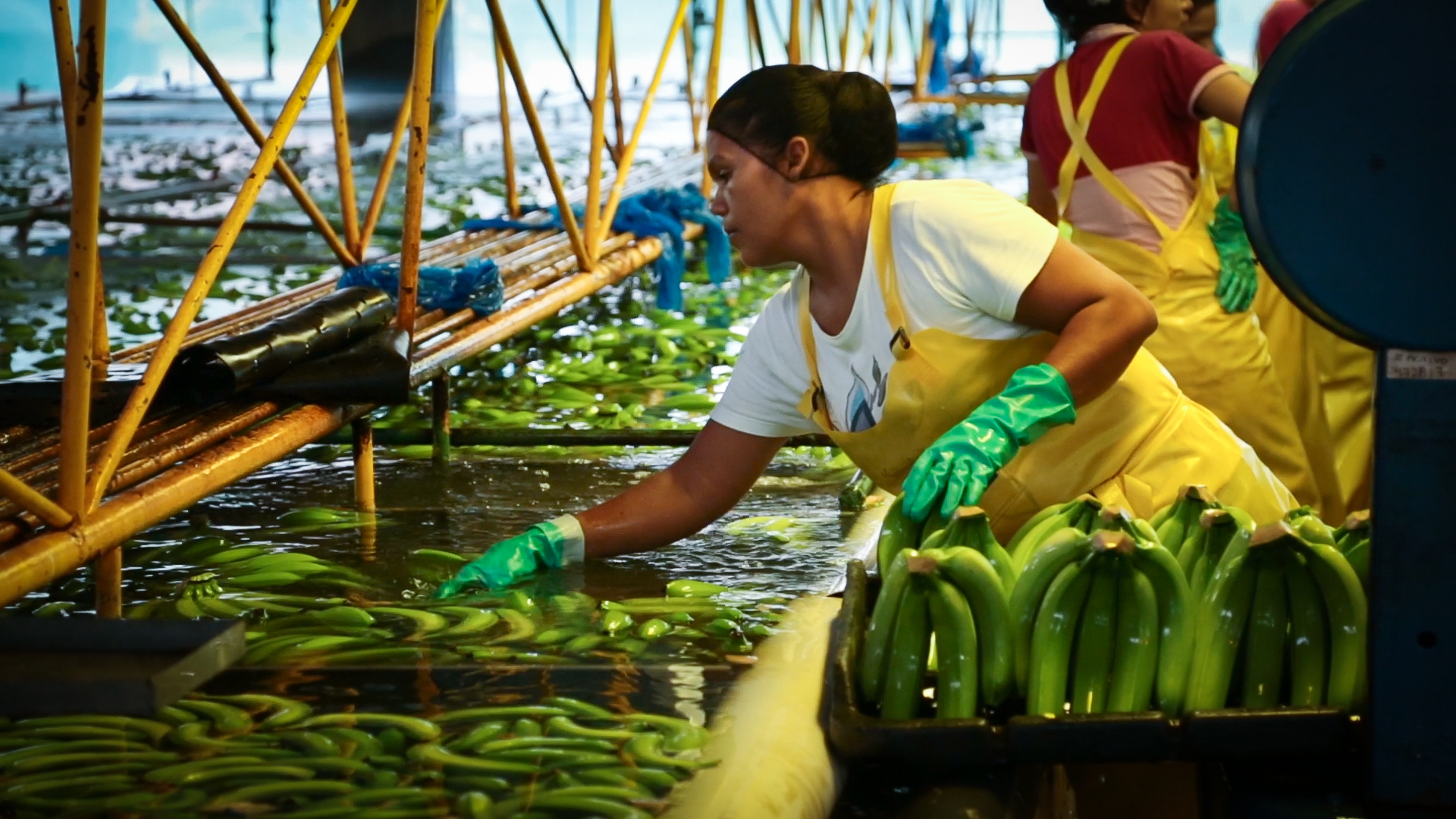
Dole, the world’s largest fruit and vegetable producer, is attempting to achieve carbon neutrality in its entire Costa Rica supply chain. It has reduced water use in processing facilities like this one by as much as 80 percent. And it’s cut nitrous oxide emissions from fertilizer in half. Photo: Sam Eaton/Homelands Productions.
Food production, from farm to table, generates more than a quarter of the world’s greenhouse gas emissions. It’s a vicious circle, because climate change is one of the biggest challenges facing farmers today.
In Costa Rica, farming accounts for a whopping 37 percent of all emissions. Since proclaiming four years ago that it would become the world’s first carbon-neutral nation by 2021, the country has become a laboratory for climate-friendly agriculture. Scientists, small-scale farmers and industrial plantations are all taking part.
We love collaborating with other people, projects, and organizations. We also serve as fiscal sponsor for projects that align with our mission. If you’d like to explore how we might work together, send us a note at info@homelands.org.
Our work would be impossible without the generosity of supporters who share our commitment to high-quality public-interest journalism. Please donate online or visit our support page for more options.