It was great to see National Catholic Reporter blogger Jamie Manson‘s thoughtful response to Sam Eaton’s PBS NewsHour story about food and family planning in the Philippines. It’s worth taking a look at the comments, too, full of passion and information.

Like the Manson essay, many of the comments on Sam’s radio piece on the Marketplace website focus on the role of the Catholic church in blocking access to free or low-cost contraceptives. Which makes sense, since the Church is clearly the main impediment to publicly funded family planning services in the Philippines. But Church opposition is not the only thing keeping poor people in the Philippines from limiting the size of their families, nor is it the main cause for stubbornly high population growth in poor countries worldwide.

Poverty, insecurity, lack of education (especially for girls), gender inequality, lack of social safety nets, inadequate public health systems, and a host of other factors conspire to keep parents from stopping at the “replacement level” of two kids (actually 2.1 or 2.3, depending on the place). At the same time, improvements in sanitation, medicine, and nutrition have allowed more children to survive to child-bearing age. There’s a lag time as the birth rate adjusts to the death rate, and that imbalance leads to some pretty serious growth. If you want to see how radically different the last 50 years have been from the rest of human history, take a look at the little graph on any of the population entries on the “Food for 9 Billion” project’s World Food Timeline.

It’s interesting to look at the role of food in all this. We often hear how the dramatic increase in food production since the 1960s has allowed the world to stay a step ahead of mass starvation. The late Norman Borlaug, a Nobel Prize-winning wheat breeder and father of the Green Revolution, is widely credited with saving more lives than anyone in human history. But some people argue that the surge in agricultural output has actually contributed to the surge in population, in line with the basic ecological principle that the population of any species will rise to meet the food supply. The argument only goes so far, as the most food-secure countries tend to be the ones with the lowest birth rates. But certainly starvation and malnutrition take fewer lives today than they did 50 years ago, and that translates into many more mouths to feed.

We shouldn’t lose sight of the fact that world population growth has been slowing impressively in the last decade or two, and not just because people in wealthy countries have stopped reproducing. According to the UN and other bodies, the global population should level off by about 2100. Unfortunately, this has led many of us to think that “the population problem” will take care of itself. But the projections are very inexact, and the markedly different birth rates in different countries show that public policy can be every bit as important as parents’ “natural” inclination to have fewer children as their living standards improve.

As Sam Eaton reported, one more child per family today can mean billions more people 100 years from now. As it is, the global population is growing by about 200,000 per day. Anything that can be done to reduce that number is likely to bring major benefits to children, families, nations, and the planet. And given the way the math works, the sooner we act, the better.
Rather than revise our previous post, we thought we’d give you a little list of links to today’s stories on Marketplace and PBS NewsHour, and to some of the extra elements that went live today.

Marketplace piece: Philippines: Too many Mouths? (there’s also a slideshow)

NewsHour piece: Turning the tide on population in the Philippines

Interactive World Food Map

Interactive World Food Timeline

“Food for 9 Billion” project page

Series page on Marketplace

Please let us know what you think!

Today is sort of a coming out for the “Food for 9 Billion” project, with features airing on American Public Media’s Marketplace and PBS NewsHour. Both stories look at the links between population growth and food security in the Philippines, and both were reported and produced by freelance journalist Sam Eaton. The TV piece was edited by Charlotte Buchen, a freelancer working with the Center for Investigative Reporting (CIR).

We hope you can catch both stories—we think they complement each other nicely. In the Marketplace piece, Sam takes us to the slums of Manila, where migrants from the countryside pick through mountains of garbage and maternity wards are packed two to a bed. He also takes us outside the city, where rice farmers in the country’s agricultural heartland are being displaced by urban sprawl.

The NewsHour piece introduces us to an innovative program in a fishing village in Bohol, in the central Philippines, where poor fishing families are embracing birth control both to escape poverty and to ease the pressure on overfished reefs. It seems that access to family planning doesn’t just change people’s attitudes about their own futures, but also about the world they’ll be leaving to their children.

Population growth is an important part of the feeding-the-world equation, but it’s not always clear what to do about it. Growth tends to slow when people get wealthier. But some say the Philippines has lagged behind its southeast Asian neighbors largely because it hasn’t taken measures to slow its growth. The country, home to the International Rice Research Institute, is now the world’s biggest rice importer, and its natural systems—reefs, forests, rivers—are badly degraded. Philippine congressman Walden Bello, a Princeton-trained sociologist and former director of Food First, has been trying to make government funds available for family planning, but the powerful Catholic church has resisted.

On a purely journalistic note, our hats are off to Sam, a longtime radio reporter, for his own coming out into the world of television. We sent him to the Philippines to do a radio story, but he came back with video of everything he did, shot on a small SLR camera. When the folks at CIR and PBS NewsHour saw his footage they were floored, and helped him craft it into a very strong piece. Marketplace and NewsHour decided to broadcast the stories on the same day, and to make some noise about the collaboration. To which we say: Woo hoo!

On this day after the first presidential primary, we wanted to let you know about an exciting project we’re involved with called Groundwork, organized by the Center for Documentary Studies at Duke University. Through radio stories and web features, it examines “the current state of American democracy—how people solve problems, make decisions, get things done—in six diverse places across the United States.” Homelands’ Jon Miller is part of the team, covering the debate over hydraulic fracturing (fracking) in one small town in central New York. You can read about Jon’s assignment and see photos and video on the project blog.

Happy New Year! I’m just back from South Asia, where I looked at grassroots efforts to prepare for climate change in Bangladesh and avert a water crisis in India. These are for future stories in the “Food for 9 Billion” series. Some snaps below.

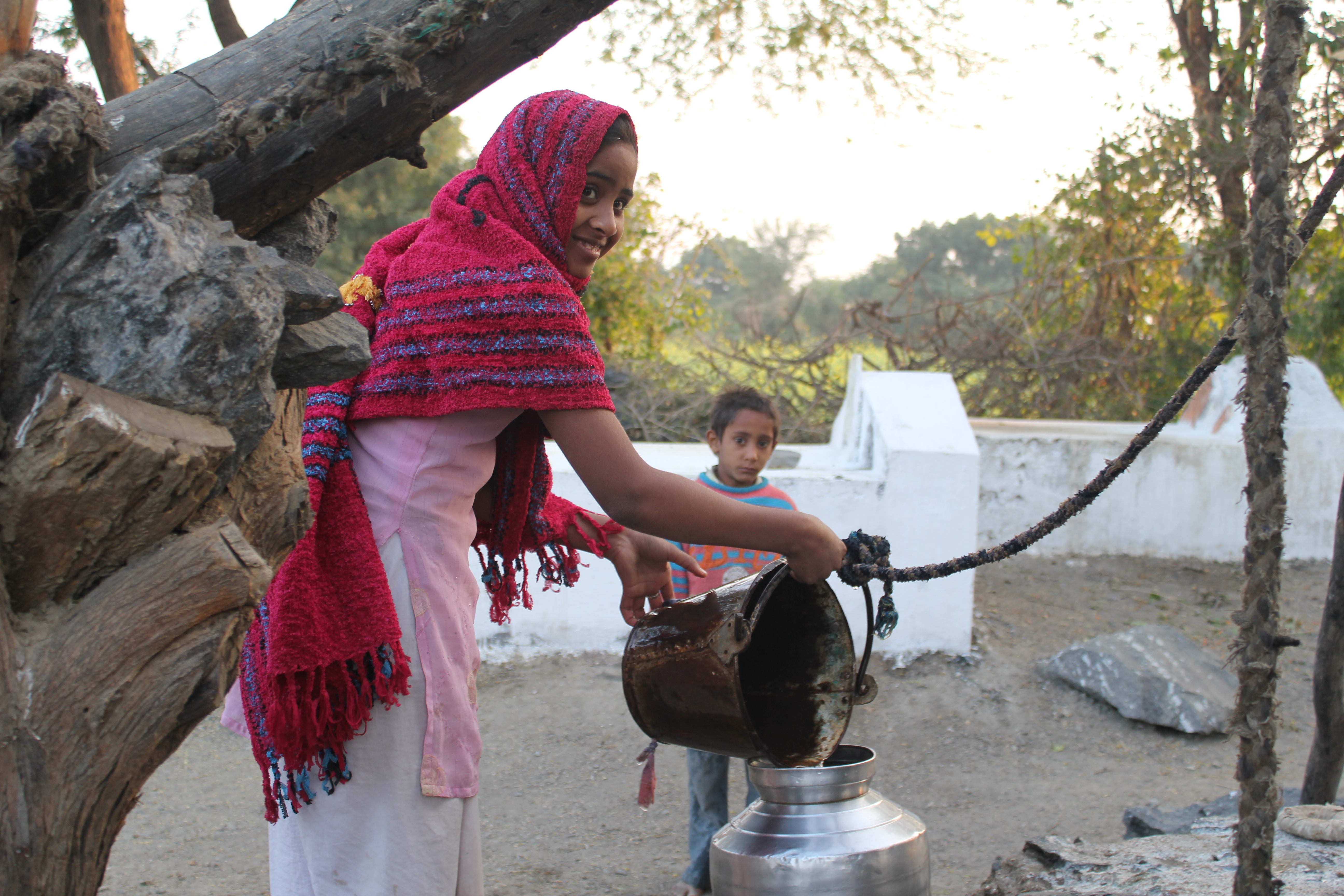
Above, villagers in Lapuria, in the Dudu District of Rajasthan, India, have raised the water table about 200 feet using rainwater harvesting and water conservation techniques.
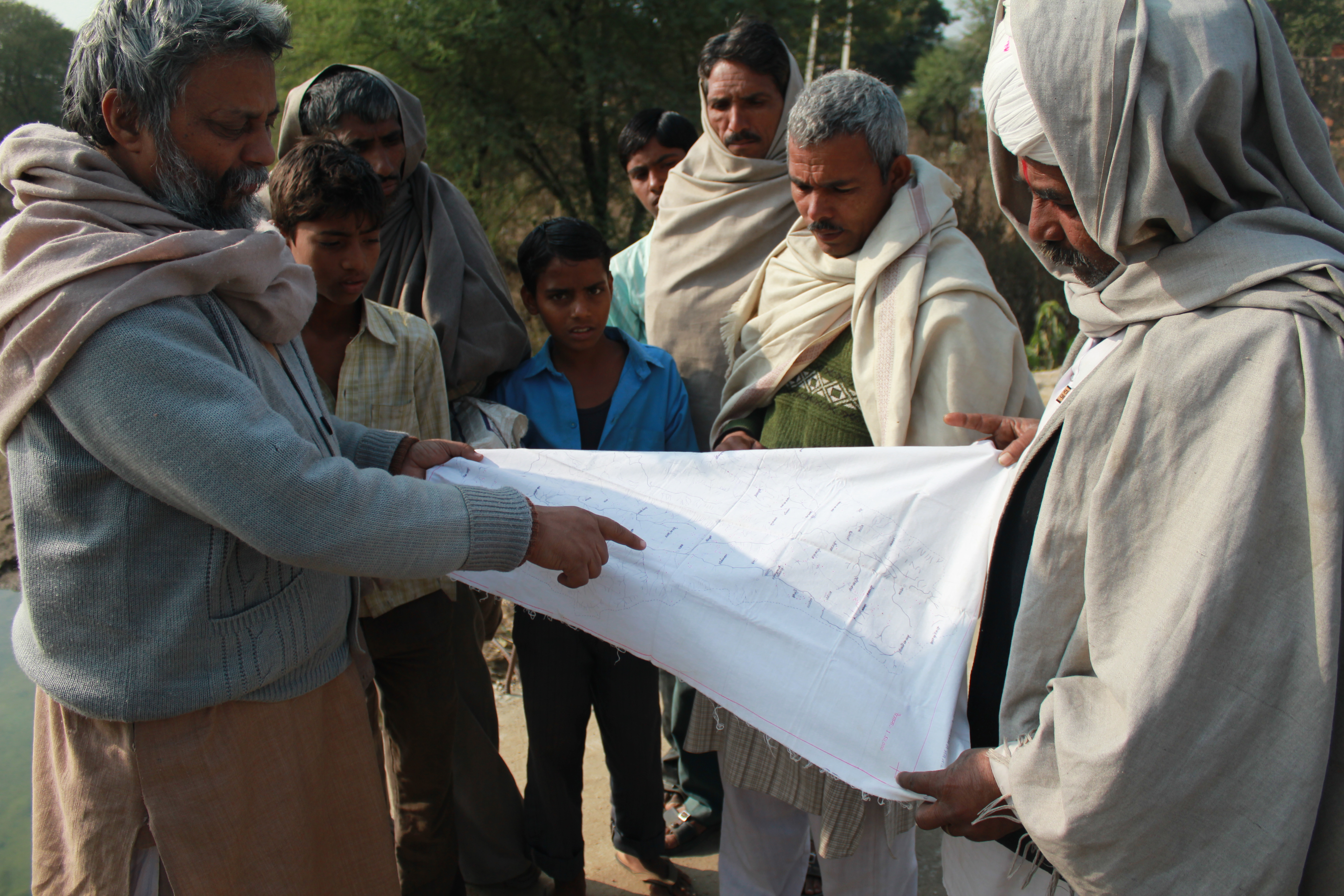
Rajendra Singh (left) is known as "The Water Man" throughout India for his work restoring watersheds. In his home area he has helped bring seven dead rivers back to life.
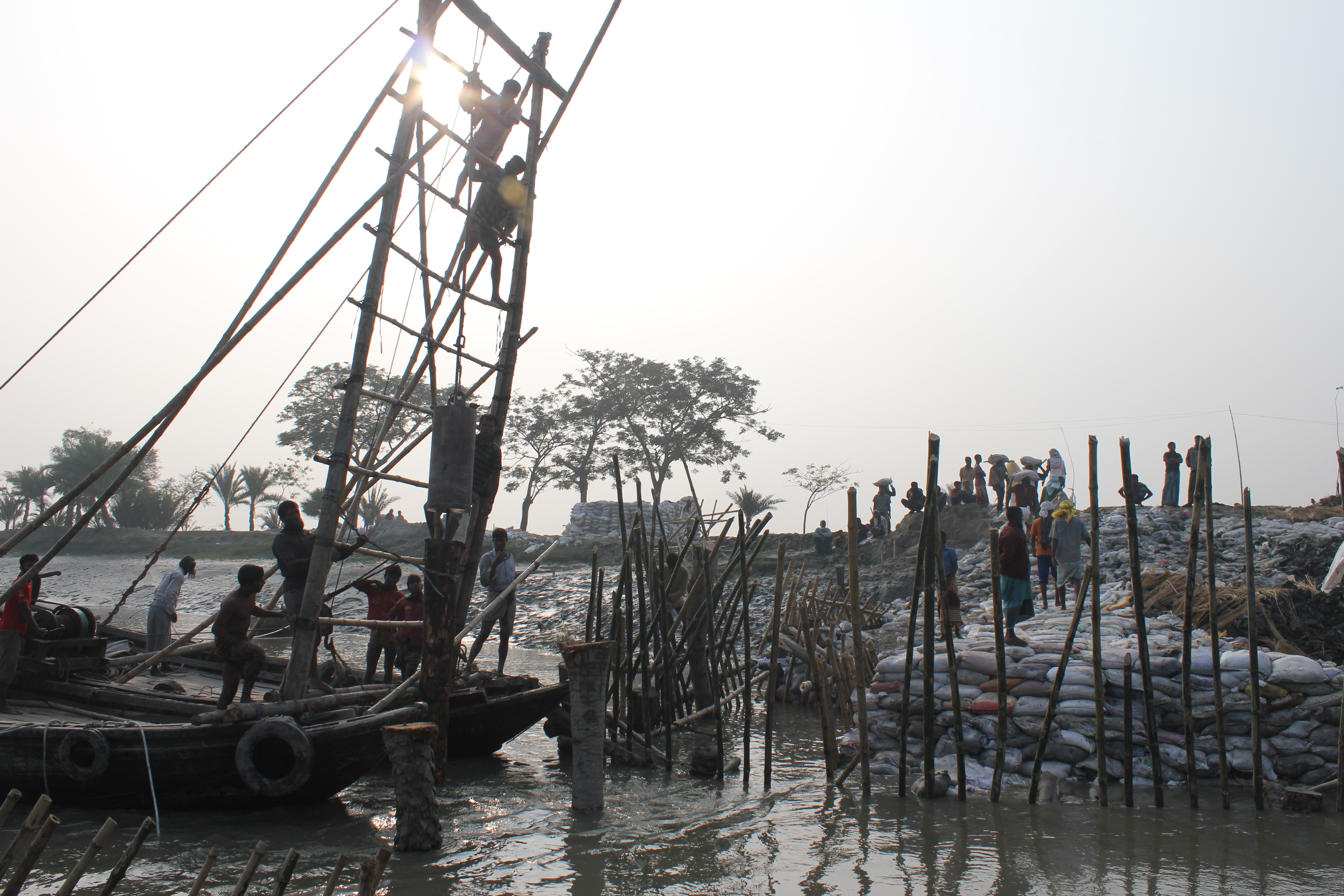
Villagers in southern Bangladesh build an earthen dam to hold back tidal surges. When a recent surge destroyed a nearby dam, the community offered its labor to build another structure.
Protesters in Satkhira, in Bangladesh, demand that the government clear waterways and help drain flooded fields. Waterlogging and salinity are expected to increase as the climate changes.

Just a quick hello from the domestic airport in Dhaka, Bangladesh, where I’m waiting to board a flight to Jessore, in the south. Some people say Bangladesh is the most vulnerable country in the world to climate change. I’ll be looking at what communities and NGOs are doing to get ready for a new world of storms, floods, droughts, salty soils and other unpleasantnesses. Then I’ll come back to Dhaka to talk to officials, scientists and activists about their priorities, successes and frustrations. Because this is for the Food for 9 Billion project, I’ll be asking mostly about food and agriculture.

Plane is boarding—all for now.

Jon

As Egyptians prepare to vote in the second round of parliamentary elections this week, Sandy Tolan explores the roots of what some have called “the revolution of the hungry.” Listen for his story tonight on American Public Media’s Marketplace.

It’s the latest installment of “Food for 9 Billion,” a collaborative project of Homelands Productions, the Center for Investigative Reporting, Marketplace, and PBS NewsHour.