homelands home

Our spiffy new website went live four weeks ago, and now that we’ve lived with it for a while, we thought it was time for a formal introduction.

The redesign is meant to make it easier to search, see, and listen to our archive of more than 180 stories dating back to 1991. It also works pretty well on phones, tablets, phablets, tablones, and other mobile devices, real or imagined. And it doesn’t look quite so 2004 as our old site.

While our friends tell us the style is clean and sleek, there’s a lot going on under the hood. The biggest thing is probably the custom search function, with all sorts of “advanced tags” to let you specify topics, geographical regions, producers, and so on.

The “Who We Are” section makes it easier to check out our bios and admire our mugs, the “Work With Us” section is an open invitation to colleagues and would-be colleagues, and the “Support” section makes the case for why you should be donating to Homelands RIGHT NOW.

Homelands.org was designed by Lael Tyler and developed by Alex Hall. Curiously, neither has a website or a social media presence, although they assure us they’re legit. They do have email addresses; you can reach Lael here and Alex here. We heartily recommend them both.

A cow, owned by John Harter, is trucked to a sale barn auction in Winner, South Dakota. The photo, by Jeff Jacobson, was taken on his journey to meet the Americans whose lands would be disrupted by the controversial plan to pipe petroleum from Canadian tar sands to export facilities on the Gulf of Mexico.

As the U.S. Senate prepares to vote on the Keystone XL Pipeline this week, we thought we’d let you know about a terrific photo essay from the path of the proposed pipeline that recently appeared in Politico. Photographer Jeff Jacobson is a long-time friend and collaborator with Homelands producers.

Jacobson’s photographs are in the permanent collections of The Whitney Museum of American Art in New York, The San Francisco Museum of Modern Art, The Houston Museum of Fine Art, George Eastman House in Rochester, NY, The Center for Creative Photography in Tucson, AZ, and Center for Photography at Woodstock, NY. His latest book is The Last Roll, Daylight Books, 2013.

Barbarita Pichasaca
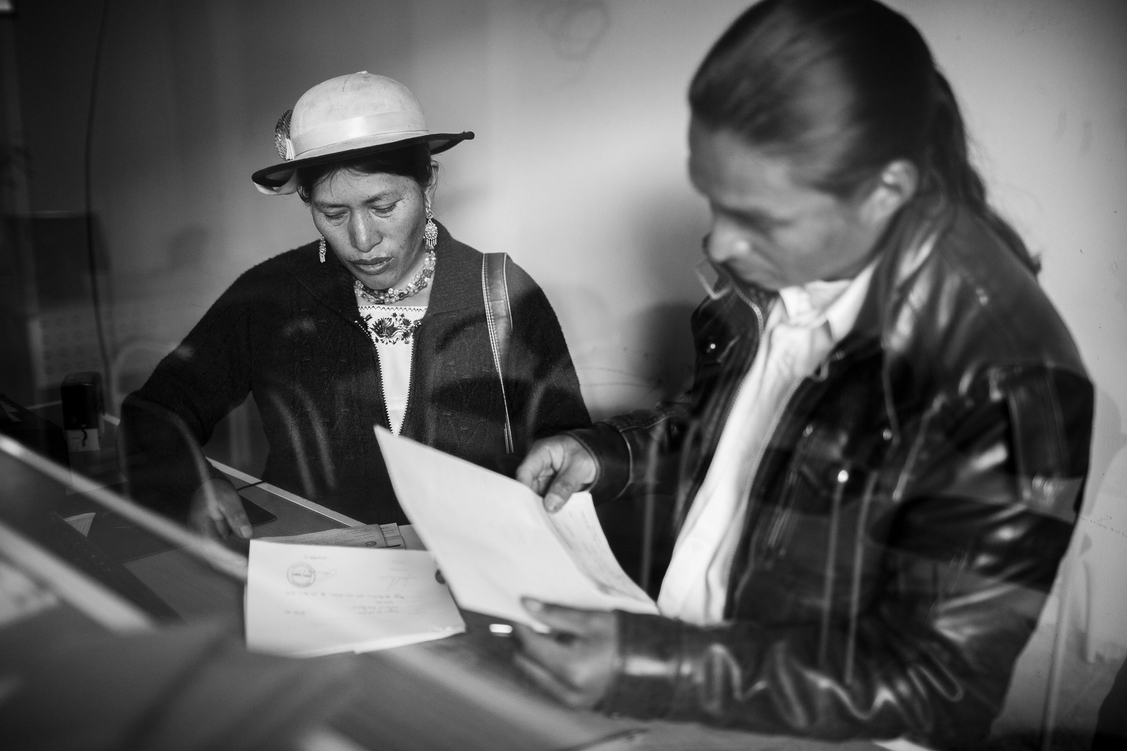
Barbarita Pichasaca, left, with an employee of the banking cooperative she founded in Cañar after several years in the United States. Photo by Bear Guerra for The New York Times.

For the 60,000 residents of Cañar, Ecuador, the costs of migration can be great, especially for children. But the benefits can be great as well: unprecedented access to education and jobs, freedom of movement and financial independence for women, especially indigenous women, whether they left and returned, or never left.

Homelands’ Ruxandra Guidi and Bear Guerra discuss the two faces of migration in Ecuador in an Op-Ed piece in today’s New York Times. Their reporting was supported by the International Reporting Project.

10_guerra_kuna_yala
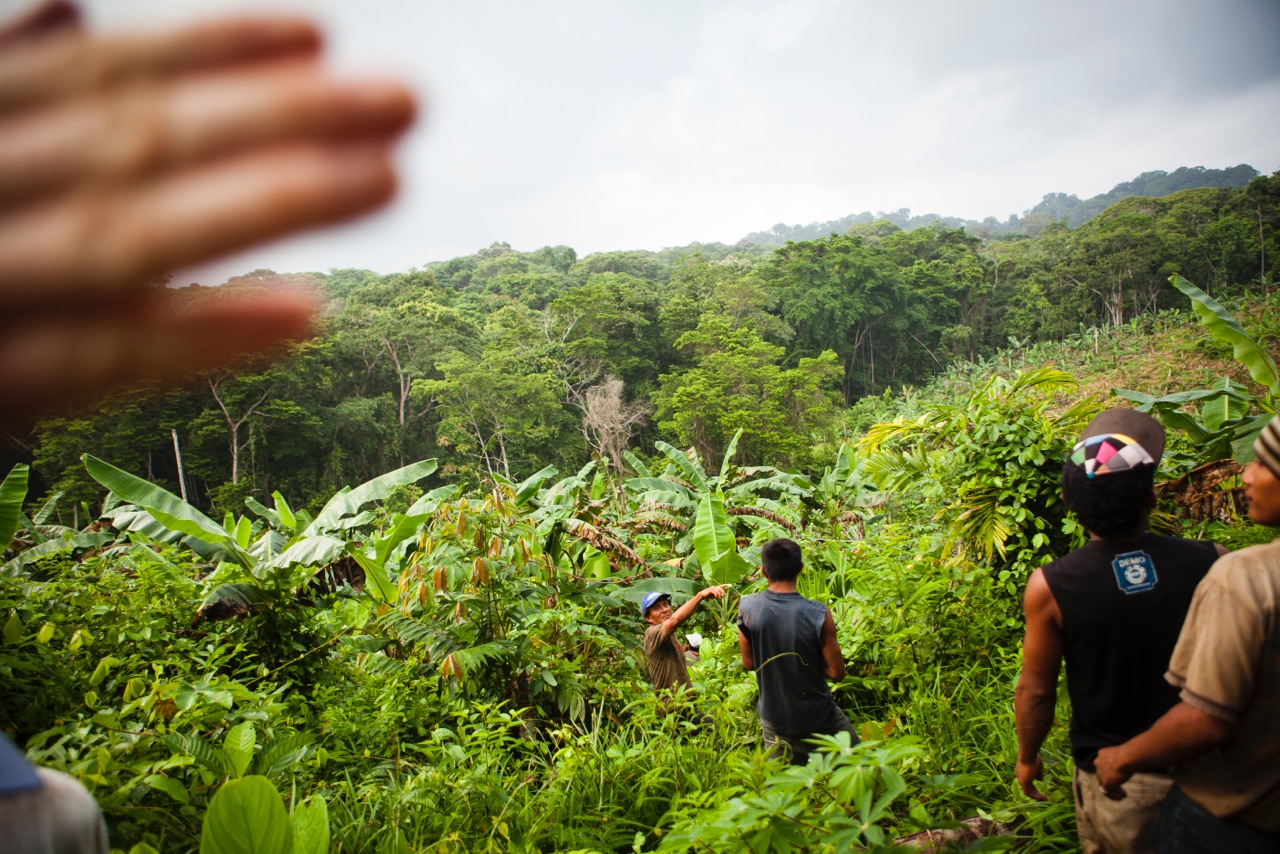
The Guna won their land from the Panamanian government after a revolution in 1925 and have been managing it communally ever since. Here Marcos Ramirez (center) directs members of the Yarsuisuit Collective as they weed a plot that they cultivate in the forest. Photo by Bear Guerra.

Like many of the world’s indigenous groups, Panama’s Guna people are facing formidable challenges: the impacts of climate change, encroaching outside influences, and a younger generation that’s drifting away from its roots.

Yet their situation is not nearly as dire as it might be. One reason is their communal system of forest management, which is emerging as a model of conservation and the sustainable use of resources.

Homelands’ Bear Guerra and Ruxandra Guidi spent time with the Guna this summer and teamed up on a photo essay and article for the environmental magazine Ensia.

Charles_Bowden_2014
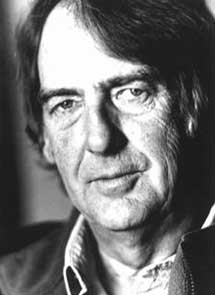
Charles Bowden, 1945-2014.

Journalist and author Charles Bowden died on August 30. Homelands’ Alan Weisman describes an outsized man with an outsized personality in a remembrance on the blog of Orion Magazine. Alan writes:

“Should you aspire to write yourself, absolutely do read him, but don’t try to imitate him. You can’t. No one could. But learn from his fearless commitment to saying exactly what needed to be said… Let me rephrase that: Chuck Bowden wasn’t fearless. He was scared plenty — but he had the courage to never turn away, regardless.”


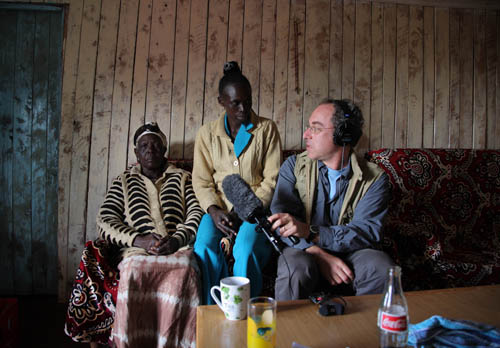
"Getting usable tape from a three-person, two-language conversation can be a culturally, linguistically, emotionally, and ergonomically complicated business," says Jonathan Miller.
Jonathan Miller interviews marathoner Selena Kosgei and her mother in western Kenya. “Getting usable tape from a three-person, two-language conversation can be a culturally, linguistically, emotionally, and ergonomically complicated business,” he writes on Transom.org.

More than 1 billion people in the world speak English. You could interview one of them every day for 30,000 years and still not exhaust your supply. So why worry about translating foreign-language voices for the radio?

Homelands’ Jonathan Miller tackles this and other thorny questions in the latest “Thoughts on Translation” column on the public radio website Transom.org. Previous contributors were independent producer Ann Heppermann and NPR East Africa correspondent (and honorary Homelander) Gregory Warner.

Musician Teodoro Cuevas waits for business in LA’s Mariachi Plaza. Photo by Emmanuel Martinez/Neon Tommy.

In 24 Hours: A Day in the Working Life, 12 Los Angeles-area workers – including a stripper, deli waitress, bus driver, metal scrapper, and bathroom attendant – take us inside their workplaces to show us what they do and why they do it.

The Labor Day special aired on public radio stations around the country yesterday. It was reported by graduate students at the Annenberg School for Communication and Journalism at USC as part of a course taught by Homelands’ Sandy Tolan and Karen Lowe of the web and radio project Bending Borders.

Karen is an old friend of Homelands; as an editor for Marketplace, she worked on many of the profiles in our WORKING series.

24 Hours is a co-production of Homelands Productions, Bending Borders, and the USC Annenberg School. It is distributed by the Public Radio Exchange (PRX).