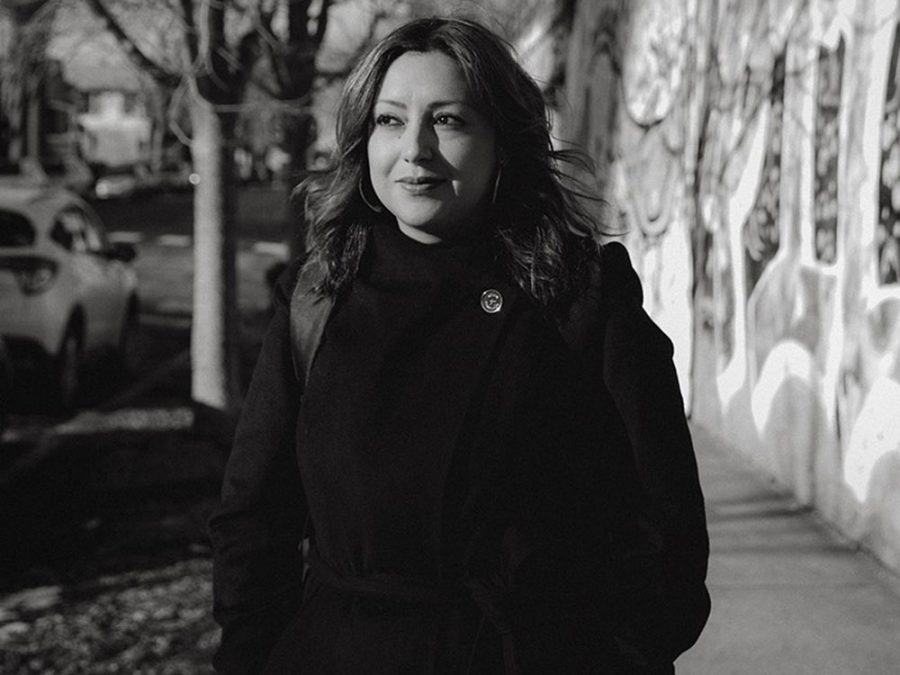
María Inés Zamudio is the recipient of the 2020 Cecilia Vaisman Award from Northwestern University Medill School of Journalism, Media, Integrated Marketing Communications and the National Association of Hispanic Journalists. Zamudio covers immigration for WBEZ, the Chicago NPR affiliate.
The Vaisman award honors an individual working in audio or video journalism who works every day to shed light on the various issues affecting Hispanic and Latinx communities inside and outside the United States. The award is named for Medill faculty member and Homelands co-founder Cecilia Vaisman, who died in 2015.
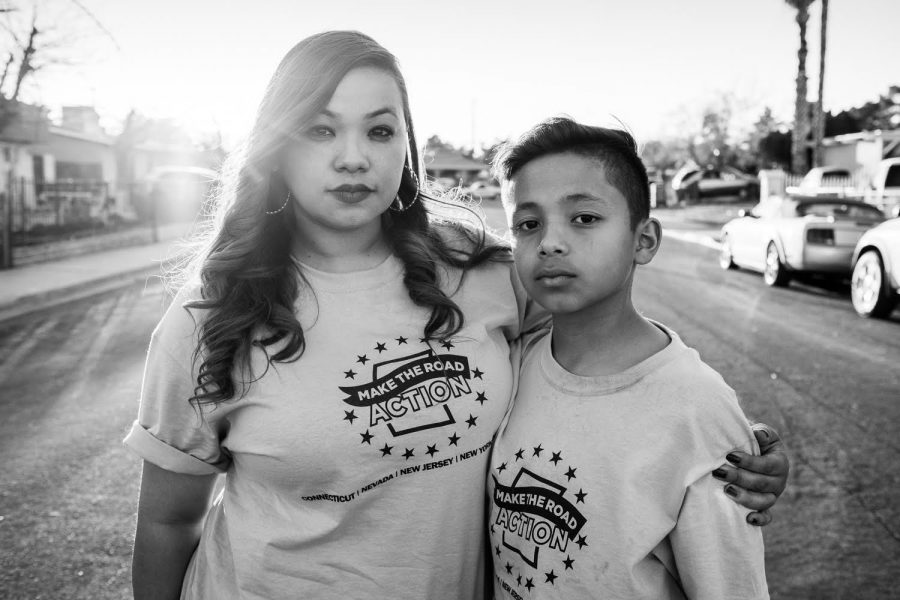
For the first time in history, Latino voters will comprise the largest non-white voting bloc in the 2020 election. In a 12-part photo essay in High Country News, Homelands’ Bear Guerra follows the Bernie Sanders campaign in Nevada as it works to win Latinos’ hearts and minds and get them to the polls on caucus day.
Sanders would go on to win 51% of the Latino vote in the February caucus. He finished with twice as many votes as his nearest competitor.
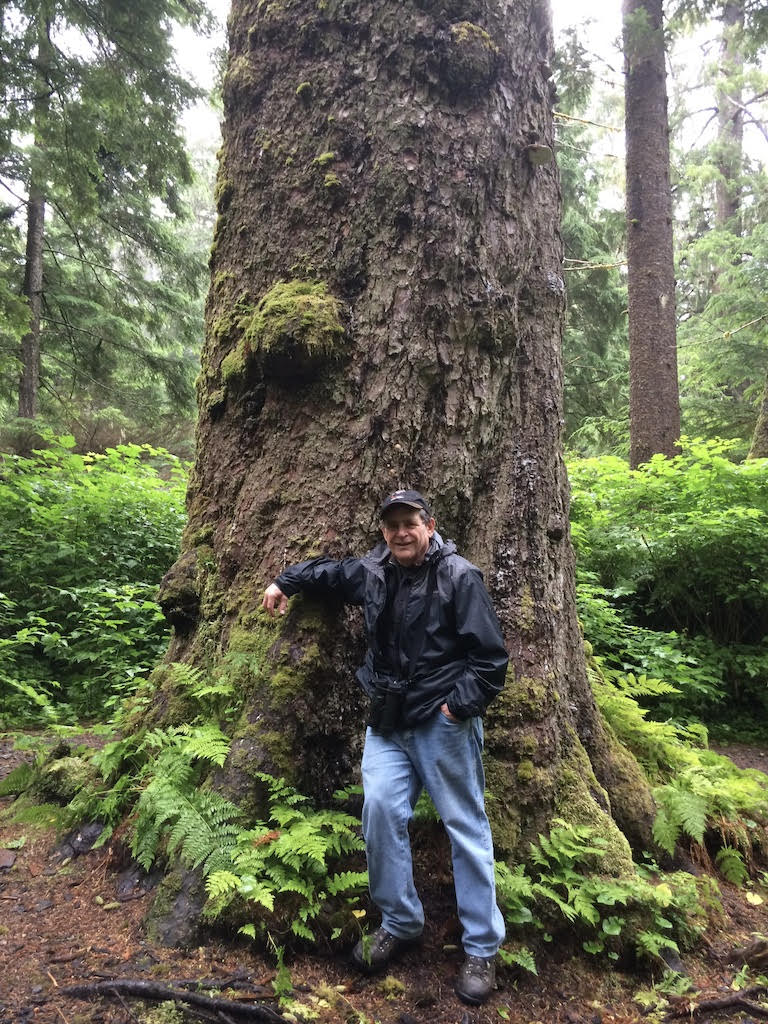
Alan Weisman poses with a tree during a reporting trip to Alaska. He has been grounded in western Massachusetts during the COVID-19 pandemic.
Homelands co-founder Alan Weisman takes writer Raffi Khatchadourian for a virtual walk in the woods near his home in western Massachusetts for a “Talk of the Town” piece in the June 1 issue of The New Yorker.
In “After COVID-19, Will Nature Take Over?”, Alan contemplates the meaning of the great slowdown in economic (and polluting) activity brought by the pandemic. His bestselling 2007 book, The World Without Us, describes the ways in which nature would recover if human beings suddenly disappeared from the planet. Readers have been returning to the book looking for lessons.
“I don’t think nature is avenging itself,” Alan tells Khatchadourian. “We are having an impact in ways that we can’t predict, because there are so many variables in the ecosystem, but until something happens we just keep forging ahead in a bubble of denial.”
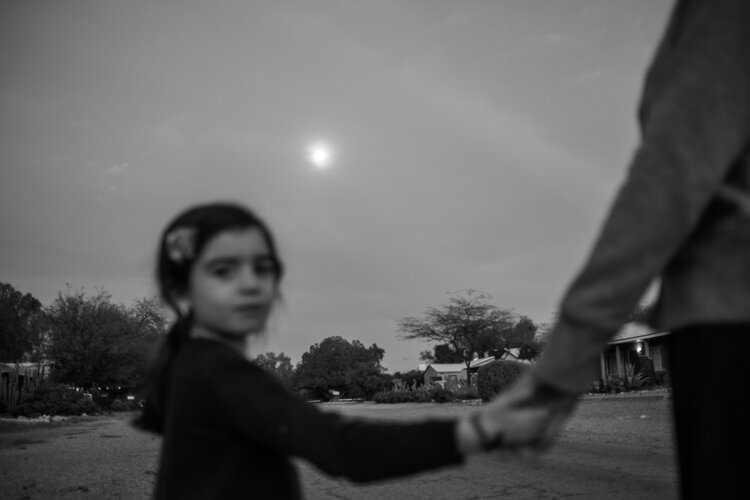
Stay-at-home measures and school closings mean families and children are stuck at home, looking for ways to stay both active and calm in the midst of uncertainty. In this audio story, Homelands producer Ruxandra Guidi and her seven-year-old daughter, Mila, find calm in a new kind of ritual, one rooted in everyday gratitude and signs of spring in the desert Southwest.
Listen to the piece over at BorderLore. You can hear more of Mila’s meditations on the website of Fonografia Collective, a collaborative project of Ruxandra and her husband (and Mila’s father) Bear Guerra.
In his his bestselling 2007 book The World Without Us, Homelands senior producer Alan Weisman imagined a planet where all the human beings had suddenly disappeared. How would natural systems respond? How long would it take for Earth to recover?
Since the COVID-19 pandemic began, his phone has been ringing off the hook. People want to know what The World Without Us can teach us about the current moment.
In an essay in the Boston Globe Magazine (full text here) marking the 50th anniversary of Earth Day, he argues that the lessons of the crisis have little to do with a post-human world. The heart of the problem is the subject of his subsequent book, Countdown: that human beings have grown too numerous and too destructive for a planet with finite resources.
“[A]s we salvage our wrecked economies, let’s discard the notion that growth equals health. Endless economic growth clearly isn’t possible on a planet that doesn’t grow — look where it’s gotten us…. Real health means fewer of us crowding and infecting each other, clear skies and water, ample room to breathe, and thriving wildlife: not for sale, but in its element, where it’s thrilling to see, and where it can keep its microbes and viruses to itself.”
Homelands producer Bear Guerra remembers looking at the sky as a child and feeling a strange mixture of “awe, fear, and hope.” In a 40-image photo essay for Emergence Magazine, he embraces all three of those sensations, exploring what darkness means not just for himself, but for humanity and the planet.
“The images in this series are evidence of an intimate personal journey, as I contemplate our light-polluted world and seek to reconnect with the night; as I ponder how the technology to which we are now tethered is affecting me and those closest to me; as I wonder how I can guide my own child to embrace the night and understand that without darkness we are not just incomplete … we fail to dream.”
In an op-ed in The Guardian, senior producer Sandy Tolan decries the decision of Wisconsin’s supreme court to hold the state’s April 7 primary election as scheduled despite the rising risk of Covid-19 and the governor’s order to postpone the vote. But he says the court is not the only political player putting Wisconsinites’ lives at risk.
The United States immigration system wasn’t always so punitive or so cruel, observes Ruxandra Guidi in an analysis for High Country News. Drawing on her years of reporting on the U.S.-Mexico border and interviews with immigration experts, she traces the ways in which the very act of migration has become criminalized.
“U.S. authorities haven’t always viewed migration through a criminal lens. Yet the Trump administration has not only done so, it has chosen to apply deterrence theory to an extreme degree. Whether a person is an undocumented migrant, or a child seeking to reunite with her parents, or an asylum seeker with credible persecution claims makes no difference to our current administration, which considers them all ‘illegal.’”
We love collaborating with other people, projects, and organizations. We also serve as fiscal sponsor for projects that align with our mission. If you’d like to explore how we might work together, send us a note at info@homelands.org.
Our work would be impossible without the generosity of supporters who share our commitment to high-quality public-interest journalism. Please donate online or visit our support page for more options.